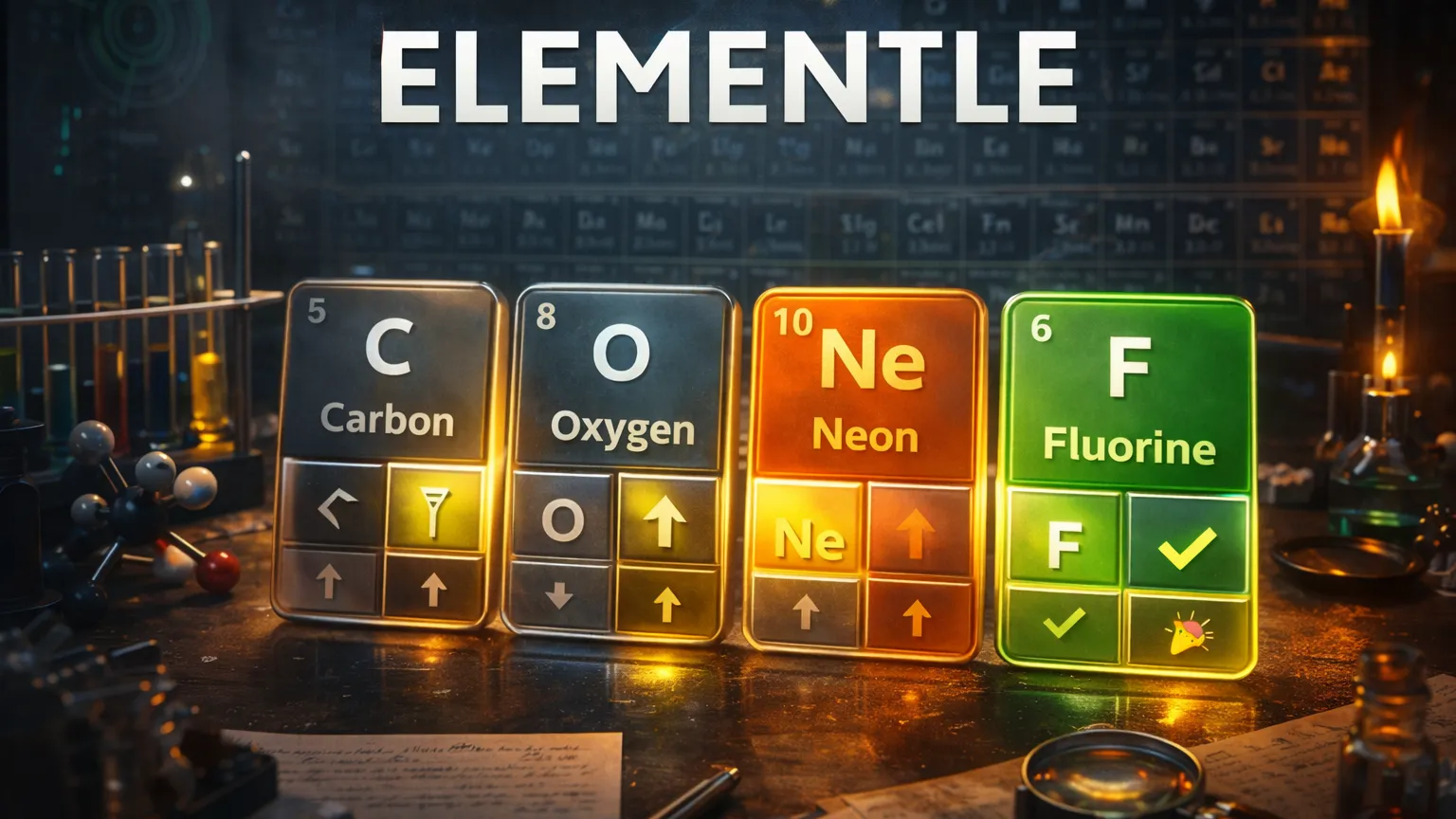
What is Elementle?
Step into the lab and face the ultimate periodic table showdown with Elementle — the daily chemistry puzzle that blends Wordle’s letter logic with real atomic facts. You must identify the secret element hidden among the 118 on the table before your 8 guesses expire.
The core twist that makes it both educational and thrilling: every incorrect guess delivers dual layers of clues. An arrow tells you instantly if the mystery element has a higher or lower atomic number than your pick, while the symbol itself lights up with green and yellow feedback on individual letters. It’s challenging because atomic numbers and symbols often surprise even seasoned students, forcing you to combine numerical deduction with spelling precision. Nail it and feel the satisfaction of unlocking the building blocks of the universe.
Elementle Game Rules (The Catch / The Trap)
You have exactly 8 guesses to name the daily mystery chemical element.
- Enter the full name or symbol of any real element for each guess.
- After every wrong guess, you receive clear feedback:
- ⬆️ Arrow: The mystery element’s atomic number is higher than your guess.
- ⬇️ Arrow: The mystery element’s atomic number is lower than your guess.
- Symbol Letter Feedback (Wordle-style on the two-letter symbol):
- 🟩 Green: Correct letter in the exact position.
- 🟨 Yellow: Correct letter but in the wrong position.
- ⬜ Gray: Letter not in the element’s symbol at all.
- Letters and atomic number clues are independent but combine powerfully to narrow possibilities.
- WIN CONDITION: Guess the exact correct element name or symbol. The game reveals the full details upon victory.
- One new element appears daily at midnight local time.
How To Play Elementle?
Enter the Lab — Load the daily puzzle to see the input field ready. No initial clues beyond the 8-guess limit.
Launch Your First Guess — Type any element (e.g., "Oxygen" or "O") and submit.
Analyze the Dual Clues — Immediate feedback appears. Example:
- Guess: Oxygen → ⬆️ (mystery has higher atomic number) | Symbol feedback: O🟩 (correct first letter) Y⬜ (not present).
- What you learn: Target is after oxygen (atomic number 8+), and the symbol likely starts with O or contains its letters differently.
Narrow with Precision — Use the arrow to bracket atomic numbers and letter colors to refine symbol possibilities. Example next guess: "Osmium" → ⬇️ or ⬆️ adjusts the range while new letter colors lock or eliminate options.
- Next Constraint: Combine the number direction with symbol deductions to zero in on a shortlist.
Claim Elemental Victory — When you guess correctly, the grid fills with full green and the element’s details (atomic number, group, period, etc.) celebrate your success. Review the clues to sharpen your chemistry instincts for tomorrow’s element.
Strategy & Tips
Start with mid-table elements (around atomic number 40–60) to quickly establish whether the target is light or heavy via the arrows. Pay close attention to the symbol’s two letters — green letters are powerful anchors, while yellows help test position swaps. Remember common symbol patterns (many end in “-ium” or use single letters like C, N, O). Use the atomic number range to eliminate huge sections of the table early. Play daily to build familiarity with element ordering, symbols, and properties — turning guesses into confident scientific deductions.