What is Flag Tone?
Flag Tone is a geography-meets-color-memory challenge about one deceptively cruel question: do you actually remember the exact color of a country’s flag, or only the idea of it?
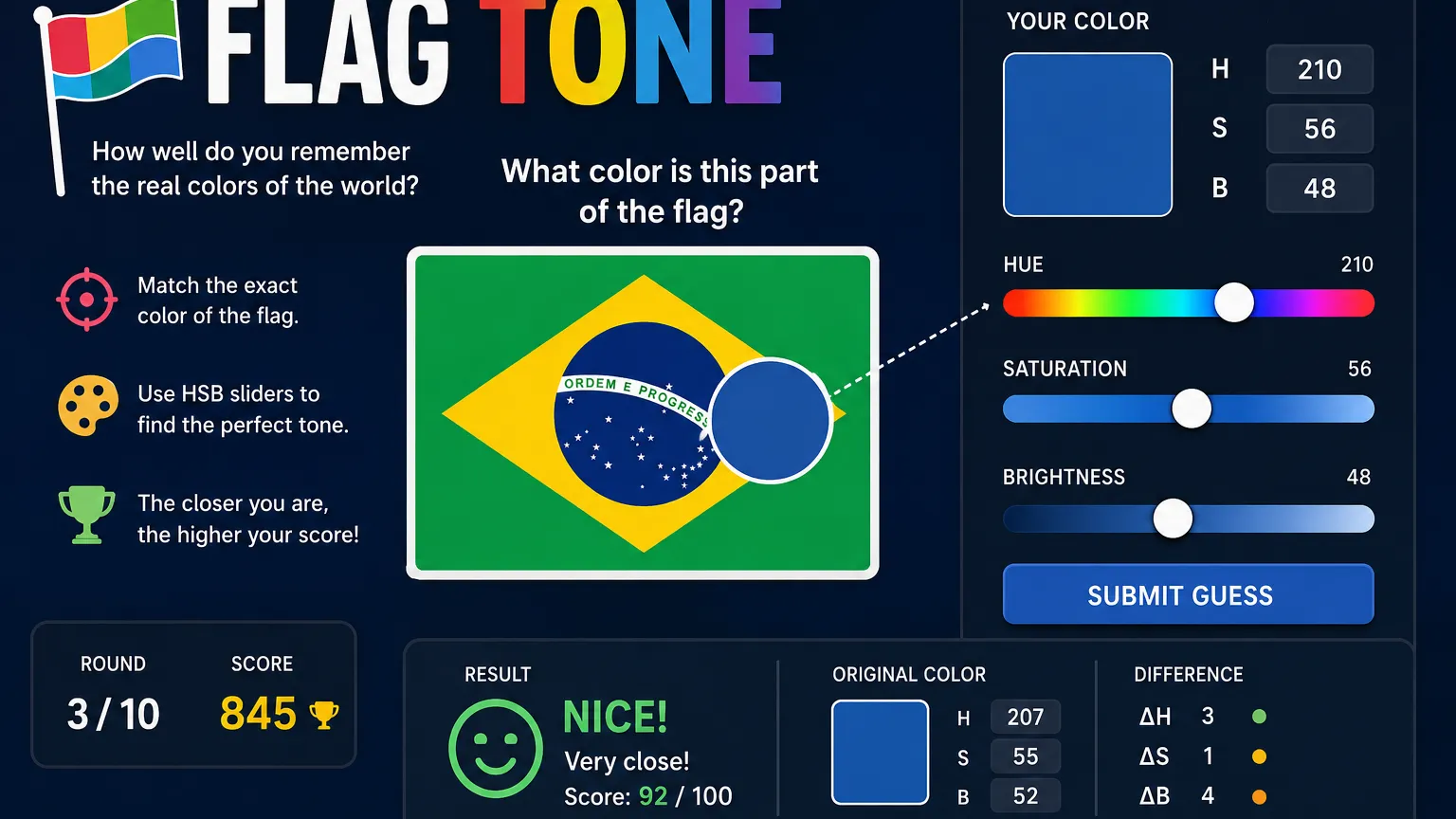
The game shows you flag-based prompts, then asks you to recreate the correct tone using Hue, Saturation, and Brightness controls. That means this is not just a flag quiz. It is a tiny duel between your memory, your eyes, and the brutal truth that the “same red” can feel wildly different from one national flag to another.
Flag Tone Game Rules (The Catch / The Trap)
Flag Tone is built around precision, not recognition.
- You are shown a flag color target or a specific part of a country’s flag.
- Your job is to match that missing or highlighted color as closely as possible.
- You adjust the color with H, S, and B values:
- H = Hue: the color family, such as red, blue, yellow, or green.
- S = Saturation: how vivid or muted the color feels.
- B = Brightness: how light or dark the color appears.
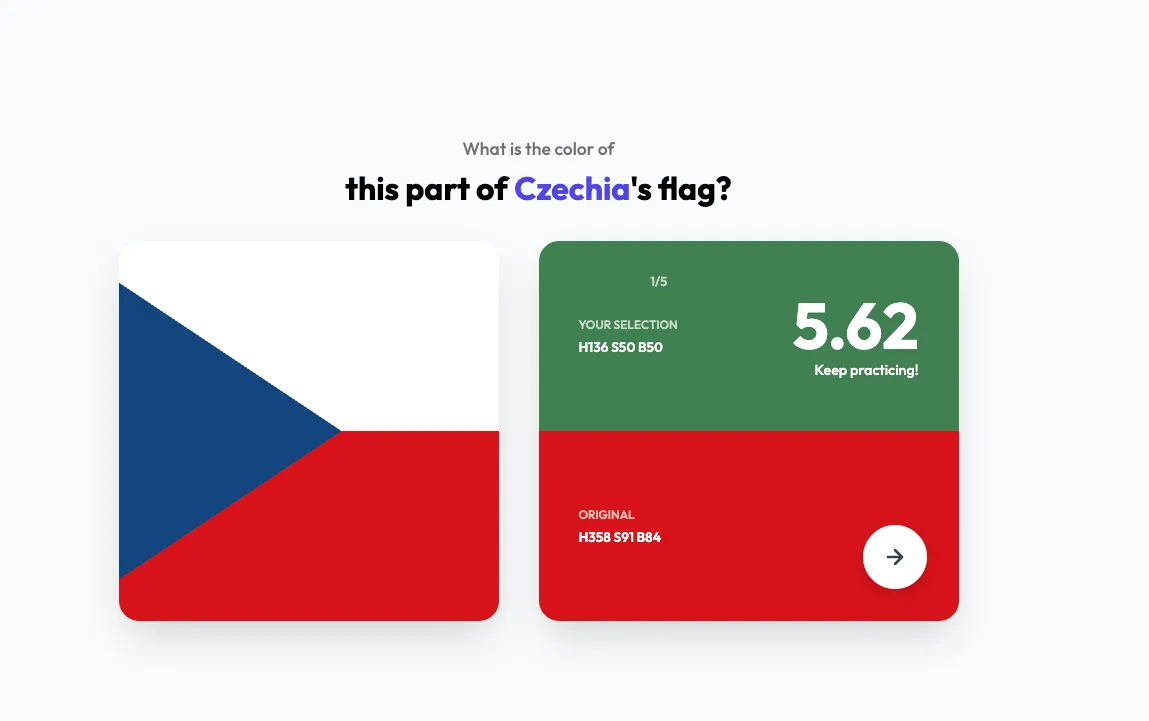
- The game compares your selected tone with the original flag color.
- Your score depends on how close your guess is to the real tone.
- A run uses multiple flag prompts, so one lucky guess is not enough to survive the whole challenge.
The trap is simple: you may know the flag, but the game asks whether you know the exact shade.
Example visual logic:
`text Prompt: What is the color of this part of the flag?
Player Selection: H200 S50 B50 Original Tone: H195 S45 B70 Result: close hue, but brightness is off Lesson: the color family was right, but the flag was lighter than expected `
How To Play Flag Tone?
Step 1 – Read the flag prompt
The game asks for the color of a specific part of a country’s flag. Before touching the picker, picture the flag in your head: stripes, emblem, background, or small detail.
Step 2 – Choose the color family
Start with Hue. Is it a navy blue, sky blue, scarlet red, golden yellow, deep green, or something more unusual?
Step 3 – Tune the intensity
Adjust Saturation. A national flag color may look bold, but not always fully neon. This is where many guesses get ELIMINATED by being too dull or too loud.
Step 4 – Fix the brightness
Adjust Brightness. This is the sneaky part. A blue that feels correct may still score poorly if it is too dark, and a red may miss because it is brighter than the actual flag tone.
Step 5 – Lock the guess and learn from the reveal
After submitting, compare your selected HSB values with the original. Each round teaches you whether your memory exaggerates certain colors, darkens them, or makes them too saturated.
Strategy & Tips
- Start broad, then narrow down. Get the hue close first, then refine saturation and brightness.
- Do not trust generic color names. “Flag red” can mean deep crimson, bright scarlet, or something in between.
- Watch brightness carefully. Many players get the color family right but lose points because the shade is too dark or too pale.
- Use geography memory as a shortcut. Some regions and flags use familiar color palettes, but Flag Tone still punishes lazy assumptions.
- Treat every miss as calibration. If your guess was too vivid or too dim, carry that lesson into the next flag.
Flag Tone works because it turns familiar flags into a precision puzzle. You are not just naming countries; you are trying to prove that your visual memory can survive under pressure.