What is Frequency Guesser?
Frequency Guesser is a tiny battle between your ears and pure sound. The game plays a tone, then dares you to guess its frequency — not the song, not the instrument, just the raw pitch hiding inside the sound wave.
The twist is brutal because frequencies do not come with labels. A tone might feel “high” or “low,” but turning that feeling into a number like 220 Hz, 440 Hz, or 1000 Hz is where the panic begins. It is simple, fast, and weirdly addictive because every round makes you wonder: do I actually know what pitch sounds like?
Frequency Guesser Game Rules (The Catch / The Trap)
The whole game revolves around one clean challenge: hear the tone, guess the frequency, score by closeness.
- You hear a sound: the game plays a tone with a hidden frequency.
- You make a guess: enter or choose the frequency you think matches the tone.
- The result is measured in Hz: your guess is compared against the real frequency.
- Closer guesses score higher: the smaller the gap between your guess and the real answer, the better your score.
- The trap: your ears may know “higher” or “lower,” but the exact number is slippery.
Visual flow:
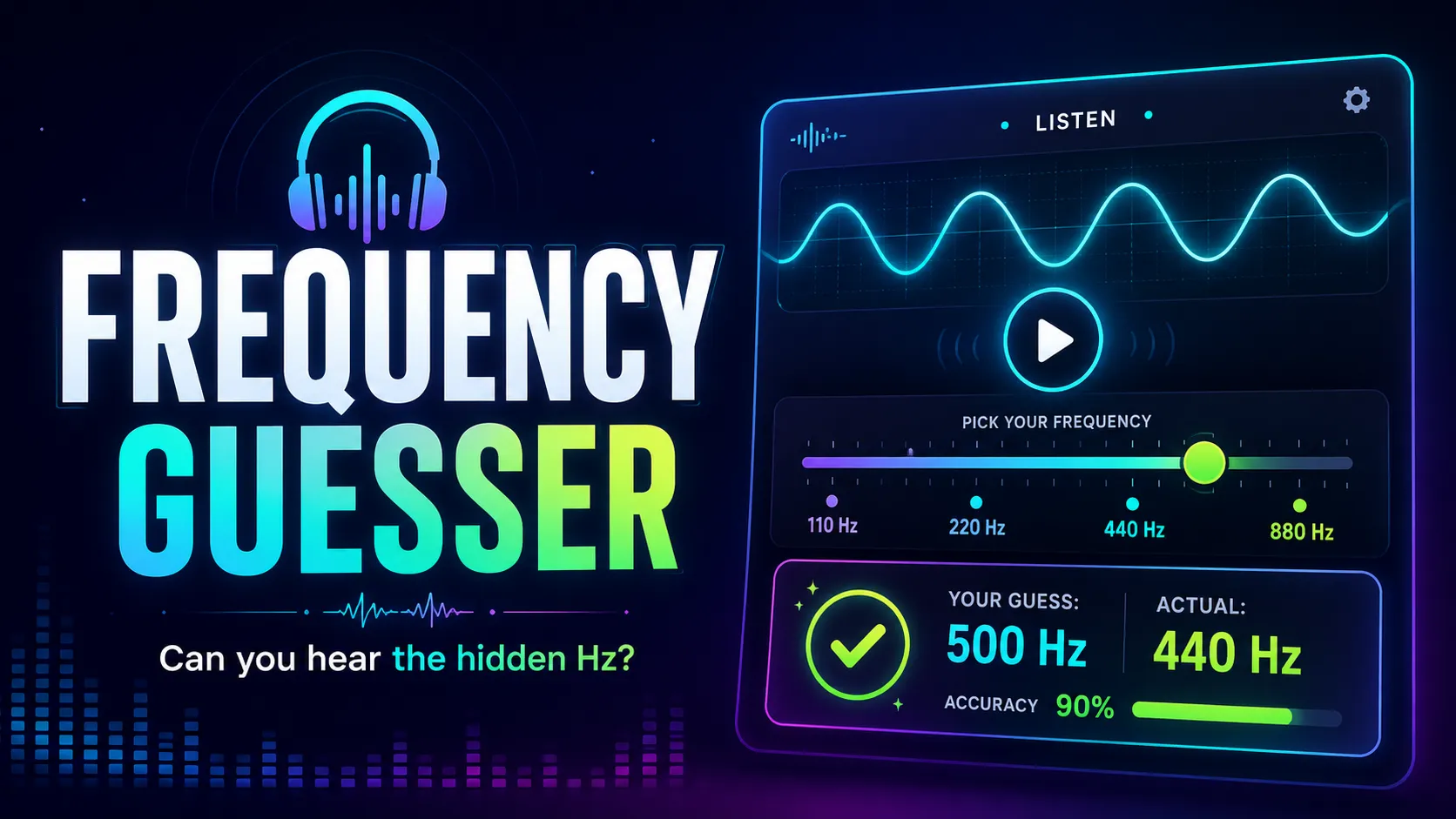
Plays: ~~~~ high toneHidden answer: ??? HzPlayer guess: 500 HzActual result: 440 HzScore logic: closer = better
How To Play Frequency Guesser?
Listen to the tone
Plays: a clean sound frequency.
Player learns: whether it feels low, mid, or high.Make your frequency guess
Player Guesses:500 Hz
Game checks: how far your guess is from the real frequency.Read the result
Actual Frequency: maybe440 Hz
What This Means: you were close, but slightly too high.Adjust your ear for the next round
Next Constraint: if the last tone was lower than expected, recalibrate. The game becomes a mental map of pitch ranges.
Strategy & Tips
- Use familiar anchors: around 440 Hz is the classic A4 tuning note.
- Low tones feel thick and rumbly; high tones feel sharper and thinner.
- Do not chase exact numbers immediately. First decide: low, middle, or high.
- After each result, remember the sound-feel: “that was 440 Hz,” “that was 1000 Hz,” and so on.
- Headphones help, especially if your speakers make low or high frequencies harder to hear.