What Is GridPaw?
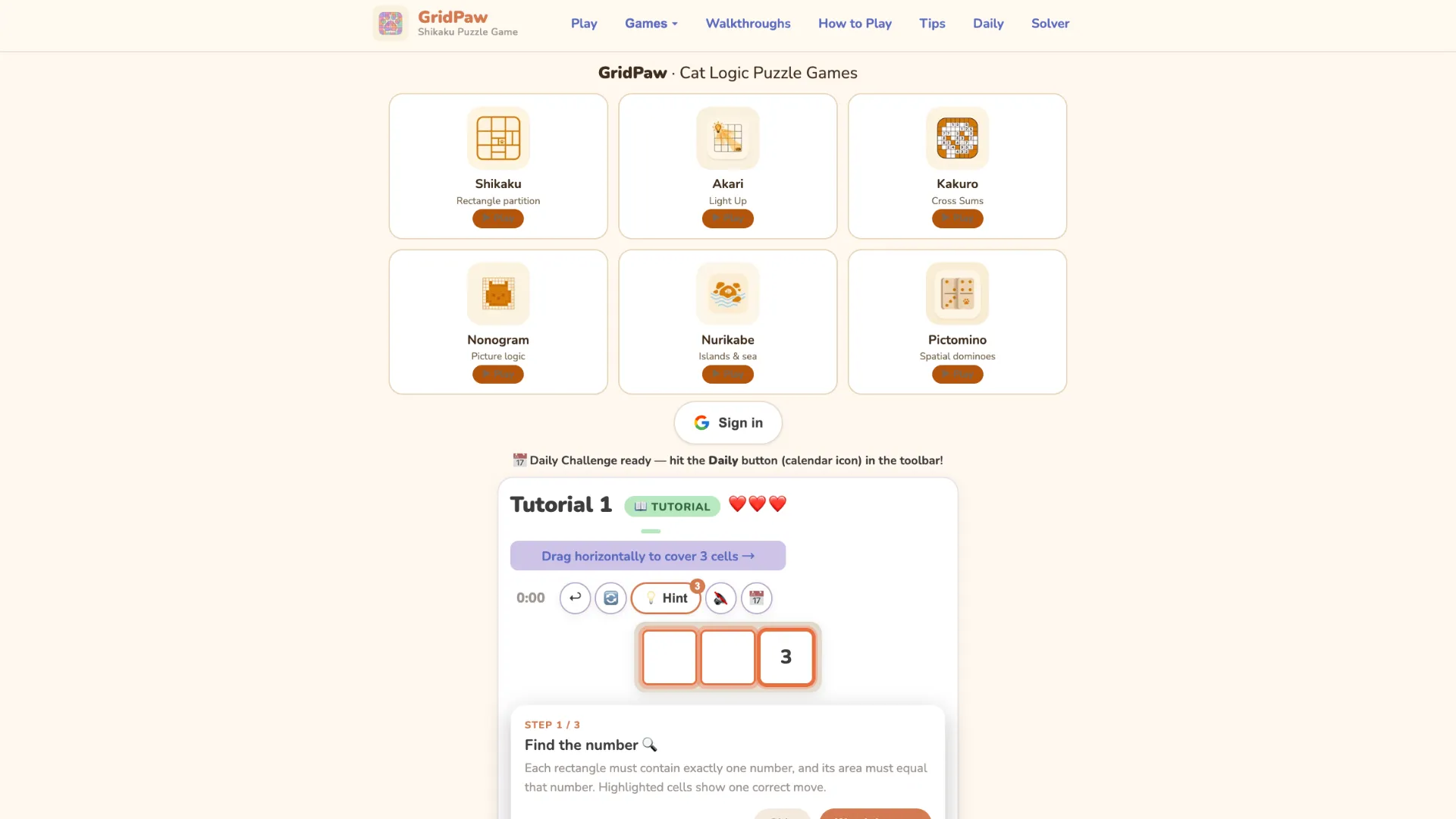
GridPaw is a browser-based Shikaku logic puzzle with a playful cat-themed presentation. The goal is to divide a numbered grid into rectangles until every cell belongs to exactly one valid rectangle.
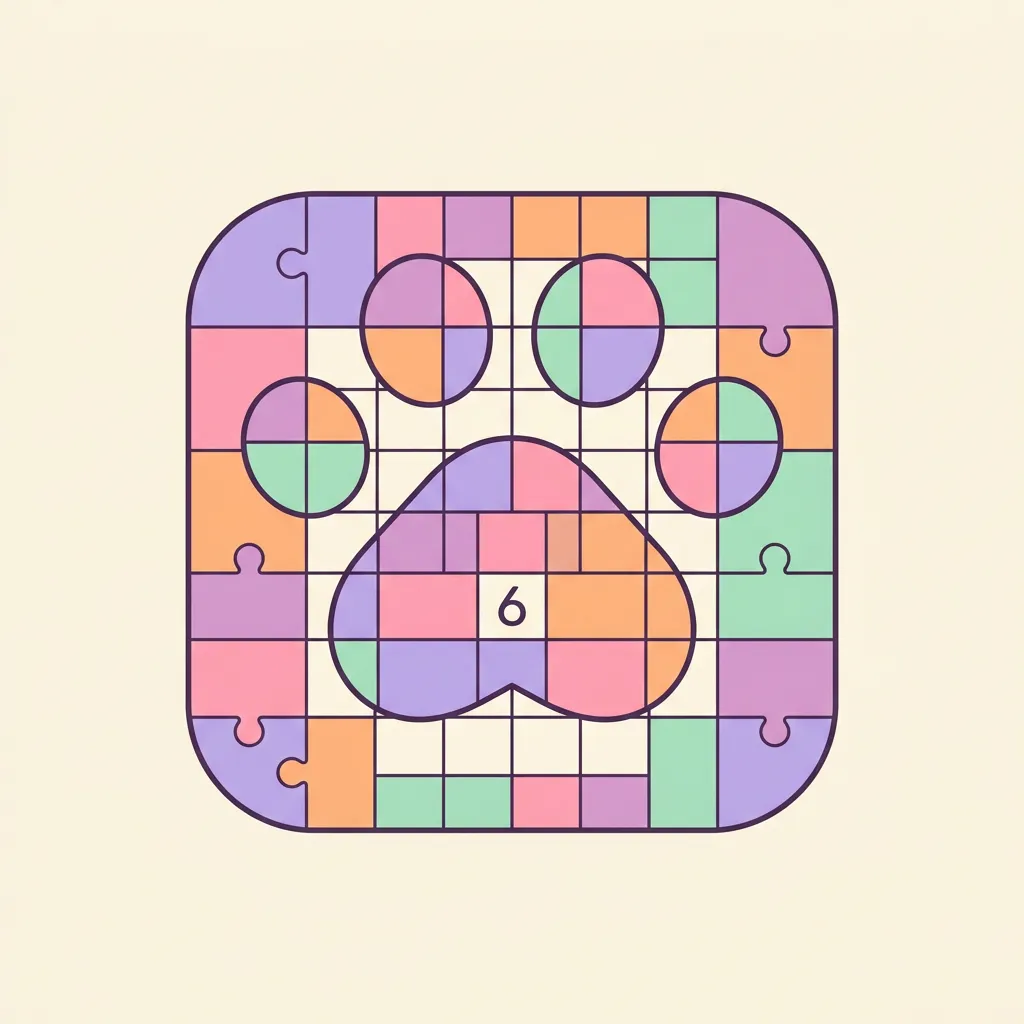
Each rectangle must contain exactly one numbered clue, and the number of cells inside the rectangle must equal that clue. For example, a rectangle containing 6 must cover exactly six cells.
The Core Rules
A completed GridPaw board must follow three rules:
- Every grid cell belongs to exactly one rectangle.
- Every rectangle contains exactly one numbered clue.
- The area of each rectangle equals the number inside it.
A clue of 4, for example, could form a 1x4, 4x1, or 2x2 rectangle. The surrounding clues, board edges, and solved areas determine which shape is correct.
How to Play GridPaw
- Inspect the numbered grid and consider the possible rectangle shapes for each clue.
- Start with clues near corners, edges, or other numbers because they usually have fewer possible placements.
- Select a rectangular group of cells containing exactly one clue and the correct number of cells.
- Use completed rectangles to narrow the remaining possibilities.
- Cover the entire board so every clue is satisfied and no cells are left unused.
Example
Suppose a clue shows 6. Possible rectangle dimensions include 1x6, 2x3, 3x2, and 6x1. If the clue is near an edge or another numbered cell, some of those options become impossible. Eliminating impossible shapes is the key to solving the board.
GridPaw Strategy Tips
Check corners and edges first. Grid boundaries reduce the number of possible rectangle positions.
Think in factors. A clue of 12 can potentially form 1x12, 2x6, 3x4, and their rotated versions.
Use prime numbers. Clues such as 2, 3, 5, and 7 have fewer factor combinations and are often easier to place.
Watch nearby clues. A rectangle cannot contain two numbered clues, which can eliminate many possible placements.
Check leftover cells. A rectangle may satisfy its own clue but leave an impossible area elsewhere on the board.
Avoid unnecessary guessing. If one section looks ambiguous, another clue may have a forced placement that reveals the next move.
Is GridPaw Worth Playing?
GridPaw is a good choice for players who enjoy Sudoku, Nonograms, KenKen, and other grid-based deduction games. Its rules are easy to learn, while larger boards offer deeper spatial reasoning and more challenging logic.