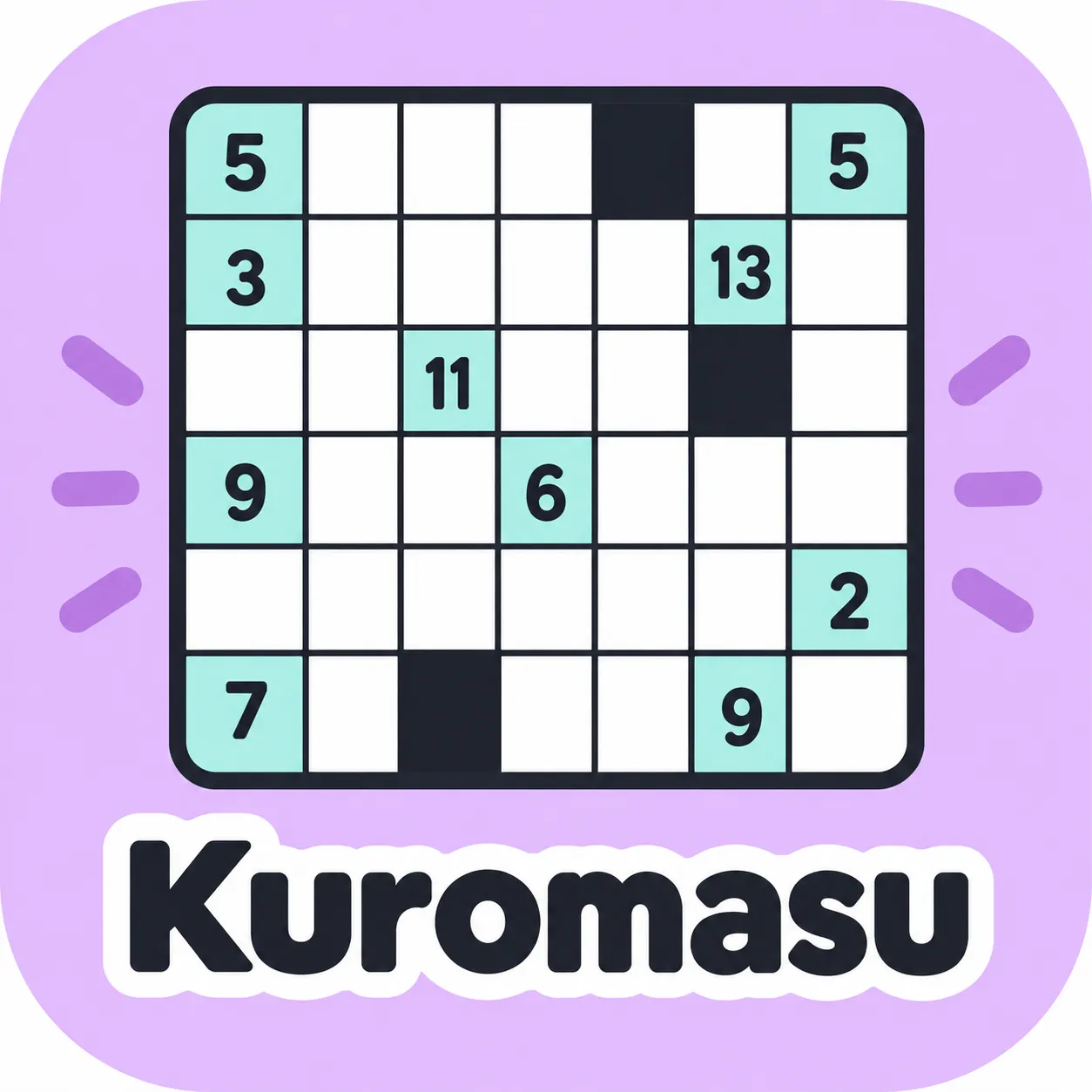
What Is Kuromasu on Nibble?
Kuromasu is a Japanese-style logic puzzle in which every square of a grid must ultimately be classified as black or teal. Nibble's browser version turns the traditional Kuromasu rules into an interactive puzzle with automatic error feedback, undo controls, limited reveals, and scoring.
The objective is not simply to match the numbers individually. Every decision affects sightlines across the board, the placement of neighboring black cells, and whether the remaining teal area can stay connected.
Nibble offers Kuromasu alongside its other daily logic games, as well as additional Kuromasu puzzles for players who want to keep playing beyond a single challenge.
Kuromasu Rules and Core Twist
Numbered cells are always part of the teal area. Each number tells you how many teal cells that square can see in total when looking up, down, left, and right, including the numbered square itself.
A sightline continues through teal cells until it reaches either a black square or the edge of the grid.
The board must also obey two important global rules:
- Black cells cannot touch horizontally or vertically. Diagonal contact is allowed.
- All teal cells must remain connected through their sides as one continuous area.
These extra constraints are what make Kuromasu more than a counting puzzle. A square may appear possible according to one number but become impossible because it would place two black cells together or cut the teal region into separate sections.
Nibble also highlights a cell in red when a move makes the puzzle impossible, giving immediate feedback when a deduction breaks the board.
How to Play Kuromasu
- Inspect the numbered cells. Start by checking how far each clue could potentially see across its row and column.
- Mark certain open cells teal. Numbered cells are already safe, and some surrounding cells can often be proven teal because a clue needs them to reach its required total.
- Place black blockers. When a numbered cell would otherwise see too many teal squares, determine where a black square must stop its sightline.
- Check the global rules. Every black placement forces its orthogonal neighbors to remain teal, and every teal placement must preserve one connected teal region.
- Finish the entire grid. Continue alternating between number deductions, black-cell separation, and connectivity checks until the required black and teal totals are reached.
For example, imagine a numbered cell marked 3. It must see exactly three teal cells in total, counting itself. If it can already see itself plus two confirmed teal cells in one direction, a black blocker may be required immediately beyond that visible run so the clue cannot see a fourth teal square.
Understanding Nibble's Number Display
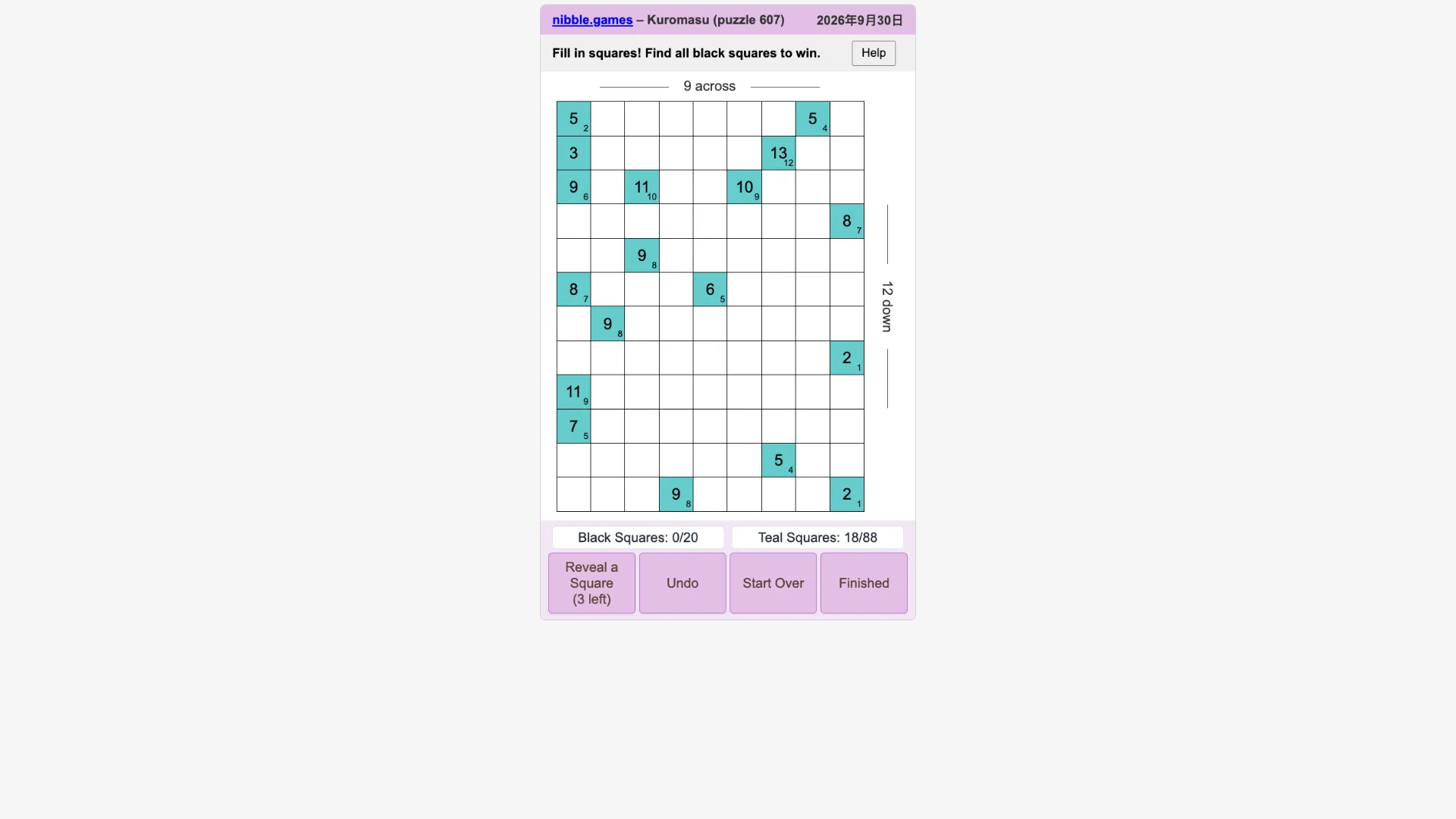
Nibble shows the main Kuromasu clue along with a smaller number that tracks how many additional teal squares are still required for that clue.
This makes it easier to see which clues are already satisfied and which still need more visible teal cells. However, the smaller number is only a helper: the placement must still obey every Kuromasu rule across the entire board.
Kuromasu Strategy Tips
Start with constrained clues. Numbers near corners and edges have fewer possible sightlines, making them useful places to begin deductions.
Use completed numbers as blockers. Once a clue already sees exactly its required number of teal cells, any additional square that would extend that sightline may need to become black.
Remember what a black cell forces. Because black cells cannot share an edge, every square directly above, below, left, and right of a confirmed black cell must be teal.
Watch for trapped teal regions. A black placement can satisfy a nearby number while accidentally cutting off part of the board. Before committing, check that all remaining teal cells can still connect orthogonally.
Combine clues. The strongest deductions often come from overlapping sightlines. A square that looks uncertain from one clue may become forced after considering another number in the same row or column.
Use Reveal sparingly. Nibble provides a limited number of square reveals when you get stuck. They can rescue a difficult board, but solving through deduction is the more satisfying challenge.
Who Should Play Kuromasu?
Kuromasu is a strong choice for players who enjoy Sudoku, nonograms, Minesweeper-style deduction, and other puzzles where a small set of rules creates increasingly complex consequences.
Nibble's version is especially approachable because mistakes can be flagged during play and the interface tracks black and teal progress. The rules are quick to learn, but larger boards can demand careful multi-step deductions before the final solution becomes clear.