Playables: Why Strange Little Games Stay With You
Discover Playables' surreal browser toys and indie games, from Pointer to KIDS, and why their simple interactions feel so memorable.
What Is Playables?
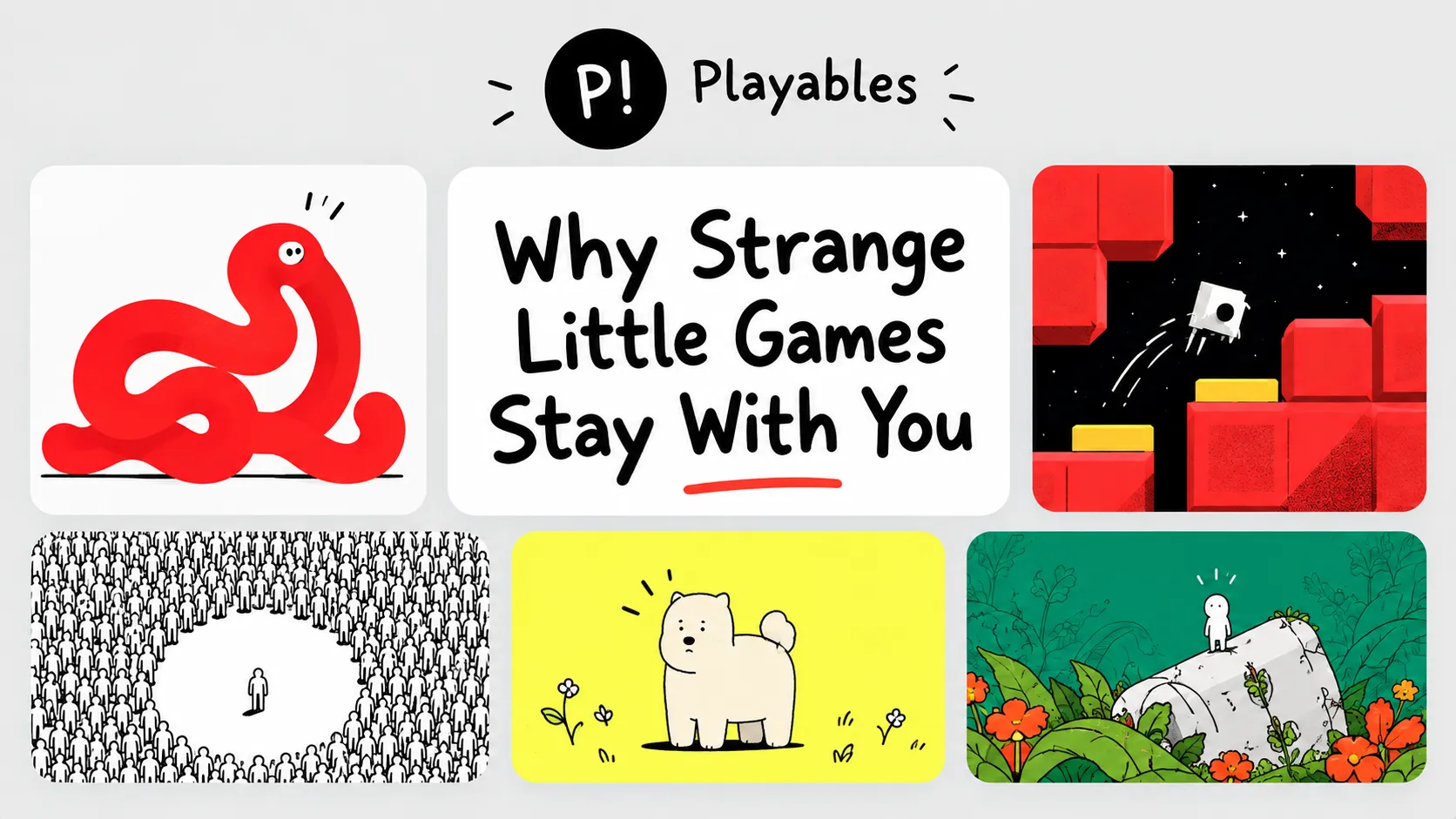
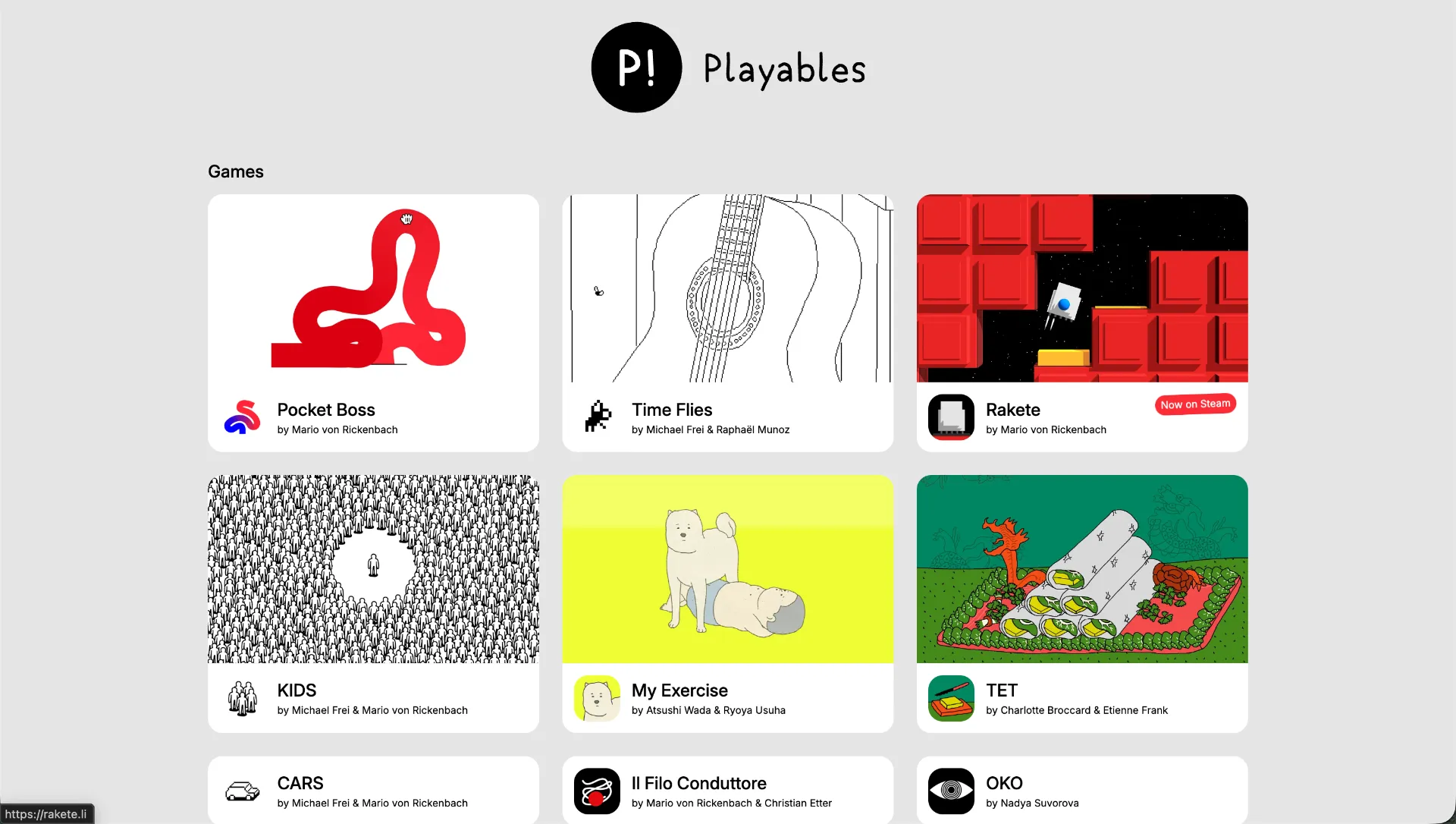
Playables is a home for games that are easier to understand with your hands than with a genre label. Some are tiny experiments you can open in a browser. Others are complete, separately released games about crowds, office charts, cooking, or the uncomfortable comedy of human connection.
The Zurich-based studio was founded by game designer Mario von Rickenbach and animator Michael Frei after their collaboration on Plug & Play. Their work often sits somewhere between animation, puzzle, and interactive art.
The important distinction for visitors is that Playables is a collection, not one game. Its Websites section contains short interactive pieces, while its Games section links to fuller releases. Not everything on the site is free or playable directly in your browser.
The Central Idea: A Small Action Can Be an Entire Game
Many puzzle games begin with an explicit goal: find a word, complete a grid, beat a timer. A Playables experience often starts one step earlier. It asks what happens when you move, click, drag, or simply interfere with something on the screen.
The first reward is not necessarily a solved puzzle. It is discovering what the world allows.
That creates a compact loop: try an action, observe the response, adjust your assumption, try again. Because the controls can be so limited, each reaction matters. A cursor, a sound effect, or the way a figure moves can carry more meaning than a long tutorial.
The result is a different kind of challenge. Instead of memorizing rules, players are often learning the rules by touching them.
Free Browser Experiments Worth Trying
Pointer: A Joke About Attention That You Can Control

Pointer gives the mouse cursor a starring role. Move the pointer and other pointers follow it; click and they point at it.
The instructions are almost the whole game, yet the behavior is entertaining because the cursor stops feeling like an invisible tool. It becomes an object that the entire screen notices.
There may not be a score to chase, but there is a satisfying cause-and-effect relationship. Every little movement creates a visible answer. The pleasure comes from experimenting with patterns rather than reaching a finish line.
Coin: When a Tiny Interaction Becomes the Punchline
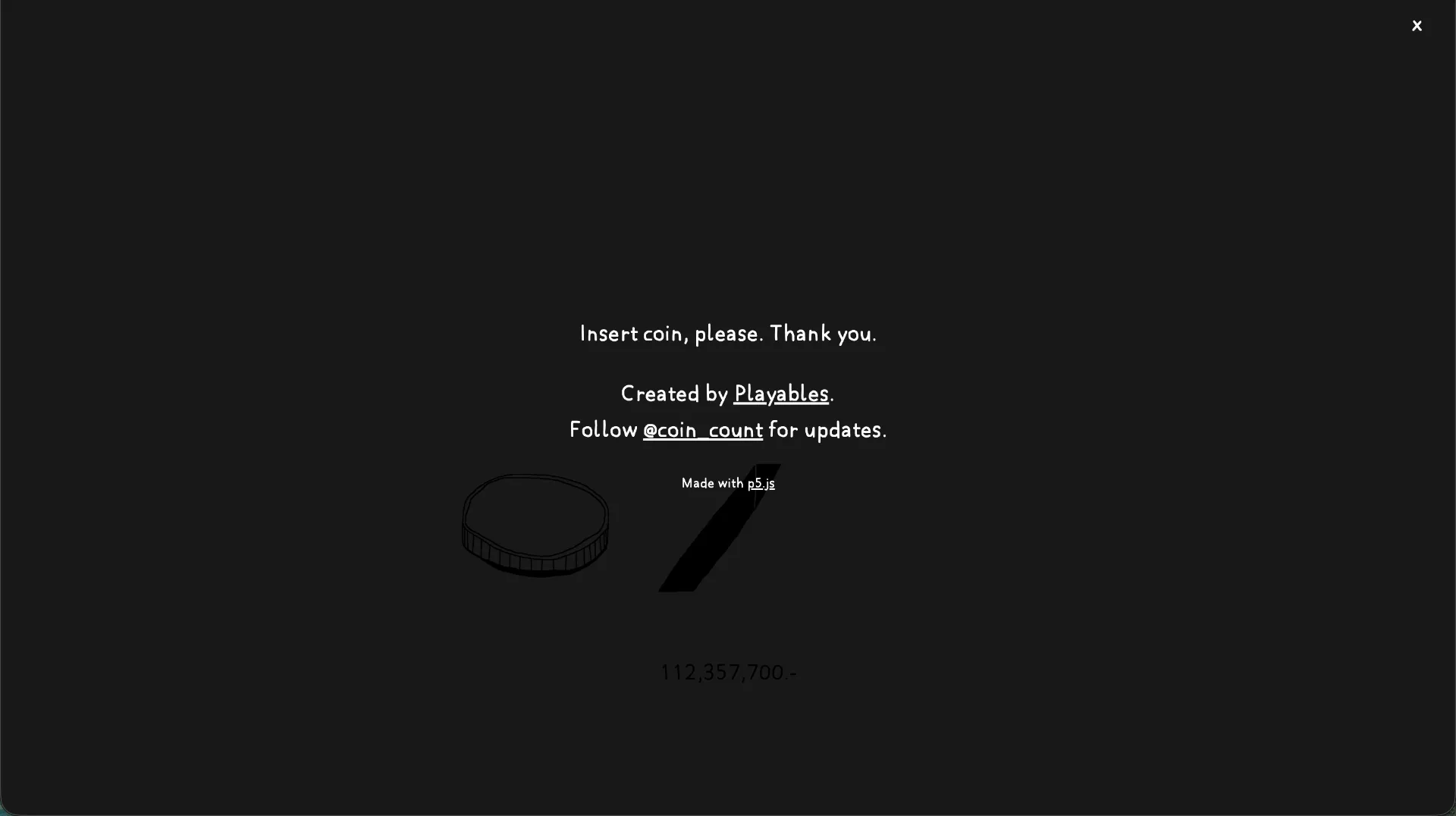
Coin greets visitors with a simple request to insert a coin. That tiny premise is enough to invite a question: what counts as inserting one, and what happens afterward?
Like a good interactive joke, it uses anticipation and response instead of a complicated rulebook. The appeal is partly the surprise of finding out how much—or how little—an ordinary action has been turned into play.
Keys and Out of Order: Curiosity Before Instructions
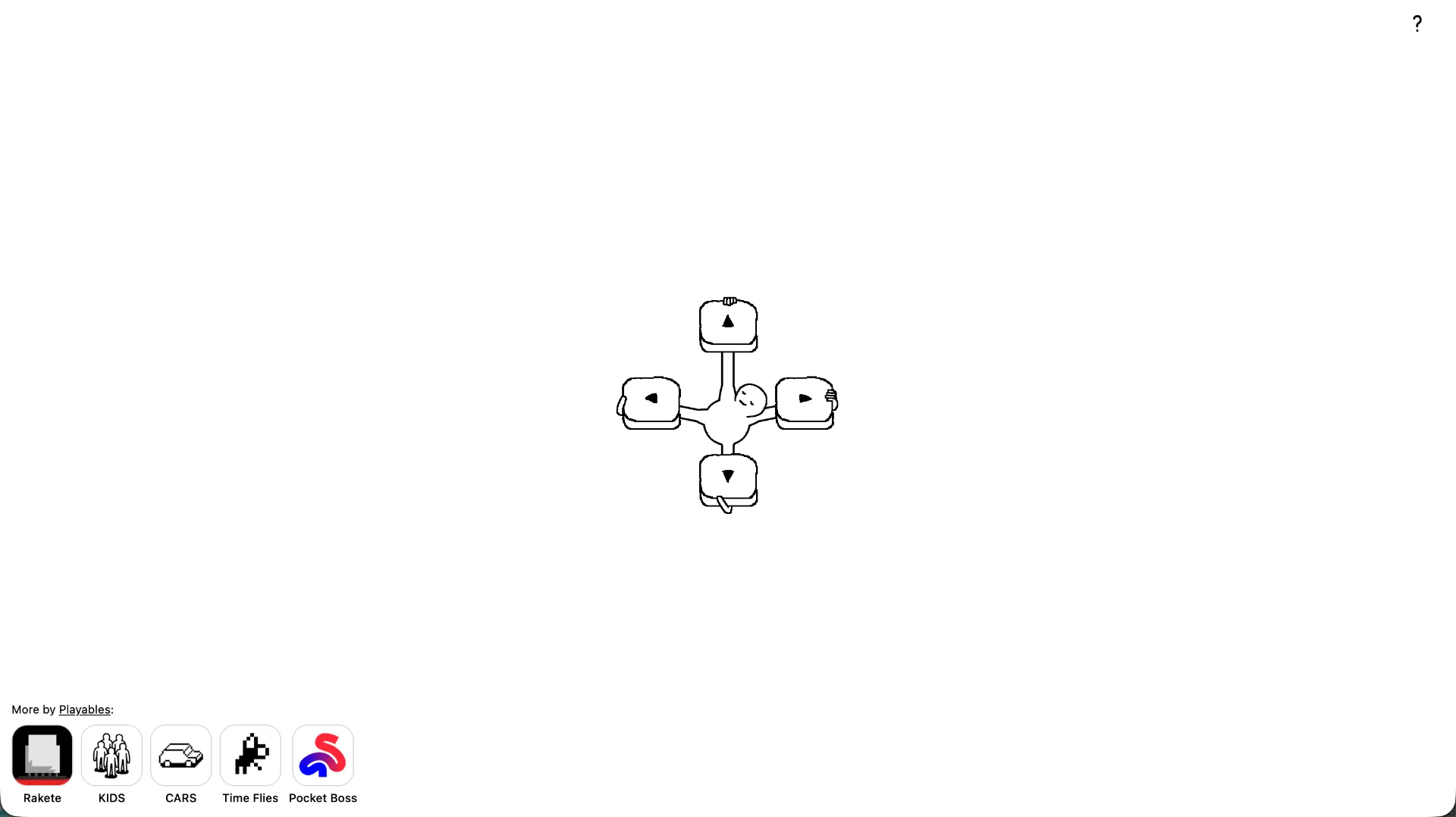
Keys offers the cryptic invitation “Help me.” Out of Order presents itself with the equally direct challenge “Solve me.”
These are good examples of how little framing an interactive piece needs. The absence of a detailed explanation is not necessarily a flaw; uncertainty gives the player a reason to test the interface. Look at what responds, listen for feedback, and resist the urge to search for a walkthrough immediately.
That approach will not suit everyone. If you prefer clearly explained objectives and measurable progress, these experiments can feel more like riddles or art installations than conventional games.
Where the Same Philosophy Becomes a Full Game
KIDS: A Crowd Is Both the Mechanic and the Message
KIDS is a short interactive animation in which you move with and against crowds until everyone is gone. Its simple black-and-white figures are striking because the composition leaves almost nothing to distract from their behavior.
The difficulty is not primarily about fast reflexes. It is about understanding collective movement and your role within it.
A crowd can be read as a visual puzzle, but it also suggests questions about following, resisting, belonging, and losing individuality. That extra interpretive layer makes a brief sequence linger after the screen changes.
Plug & Play: Touching the Logic of an Absurd World
Plug & Play transforms plug-like characters and connections into a surreal short game. Its actions are simple enough to invite experimentation, while their implications can be funny, awkward, and unexpectedly emotional.
It shows why interactivity matters to this style of storytelling. Watching an unusual animated situation is one experience. Being responsible for what happens next is another.
Pocket Boss: Manipulating Numbers Instead of Believing Them
Pocket Boss turns workplace charts into tactile puzzles. Players drag and reshape data visualizations to satisfy a demanding boss, making productivity rise or inconvenient results disappear.
The puzzle is amusing because a graph is supposed to describe reality, but here it behaves like something you can physically bend to meet an expectation.
Beneath the humor is a recognizable tension: are you solving a problem or merely making its presentation look better? The boss's requests provide direction, while increasingly strange interactions supply the challenge.
OKO and TET: Two More Ways to Make Familiar Actions Playful
OKO is the more recognizable spatial puzzle. It asks you to reconstruct images by stopping rotating circles at the right moments. Observation and timing are central, so success feels precise and earned.
TET takes another direction: a series of cooking minigames centered on preparing a Vietnamese Lunar New Year meal. Cutting tofu, washing cabbage, and rolling spring rolls turn everyday gestures into small, playful tasks.
Placed together, these games illustrate the studio's range. One makes you examine an image carefully; the other asks you to perform and experience a sequence of physical-feeling actions.
What Makes These Games Challenging?
There are at least three kinds of difficulty here, and they should not be confused.
Discovering the interaction is the first. An unfamiliar screen may give you only a sentence or a visual hint. You must determine what responds to your input.
Controlling the interaction is the second. OKO's rotating image pieces reward careful timing, while Pocket Boss asks you to learn how different kinds of charts can be manipulated.
Interpreting the experience is the third. KIDS and Plug & Play can be easy to operate without being easy to explain. The question is not always “Did I win?” but “What did that sequence make me notice?”
Players who expect every challenge to end with a correct answer may find the third category frustrating. Players who enjoy discovering meanings through play may find it the most rewarding.
Why Minimalism Feels So Satisfying
Minimal visuals make feedback easier to read. When a screen contains only a few shapes, a small movement can seem dramatic. Sound, timing, and animation become part of the mechanics rather than decoration layered over them.
The best moments also preserve a sense of authorship. You did not merely watch an animation play out; you prodded the system and prompted its response.
That is why even a brief browser toy can feel more memorable than a much longer game with familiar objectives. The interaction may be tiny, but the discovery belongs to the player.
This does not mean every experiment has deep replay value. Sometimes the surprise is the whole point, and the experience is complete once you understand the joke.
Are Playables Games Worth Returning To?
Yes, but not in the way a daily puzzle is.
There is no single Playables-wide streak, daily challenge, or leaderboard to maintain. A return visit is more likely to be about showing a strange interaction to a friend, revisiting a favorite scene, finding a missed detail, or discovering another release.
Replay value also varies by title. The creators of My Exercise explicitly describe repeated exercise as a way to unlock more animals and find hidden elements. OKO offers a clearer mastery-based puzzle loop. Short interactive narratives such as KIDS are more likely to reward reflection or a second reading than repeated attempts at a high score.
That difference is useful to know before playing. These works often prioritize a distinctive short experience over an endless progression system.
What Should You Play First?
| If you want… | Start with… | Why |
|---|---|---|
| A free, immediate browser interaction | Pointer | You understand the controls in seconds and can experiment immediately. |
| A brief, enigmatic web experience | Coin or Keys | The mystery is part of the attraction. |
| A more traditional visual puzzle | OKO | Rotating pieces give you a clear task with timing-based challenge. |
| Surreal interactive storytelling | KIDS or Plug & Play | Simple actions create unusual emotional and visual situations. |
| Puzzle comedy with a recognizable setting | Pocket Boss | Workplace expectations become manipulable graphs. |
| Playful everyday actions | TET | Food preparation becomes a sequence of colorful minigames. |
For the full games, check the linked title's available platforms and purchase options; a listing on Playables does not guarantee free browser play.
A Better Way to Approach These Games
Try each new piece without a walkthrough first. Give the interface a moment to establish its rhythm. If something appears pointless, change one action—its timing, direction, or duration—and see whether the response changes.
For the more narrative works, pay attention to what the game makes you do, not only what it shows. In KIDS, moving with or against a group matters more than explaining the group from a distance. In Pocket Boss, physically fixing a chart is part of the joke about what the numbers mean.
You do not have to uncover a grand message in every piece. Sometimes a funny response to a click is enough.
Final Thoughts
Playables is worth visiting precisely because it does not treat every game as a system to optimize. Its most distinctive works make the ordinary act of interacting with a screen feel strange again.
Start with a free browser experiment, then explore the longer titles if the studio's sense of humor and curiosity appeals to you. The reward is less about finishing everything than about finding an interaction you could not have predicted before touching it.