
What Is Kinda Hard Golf?
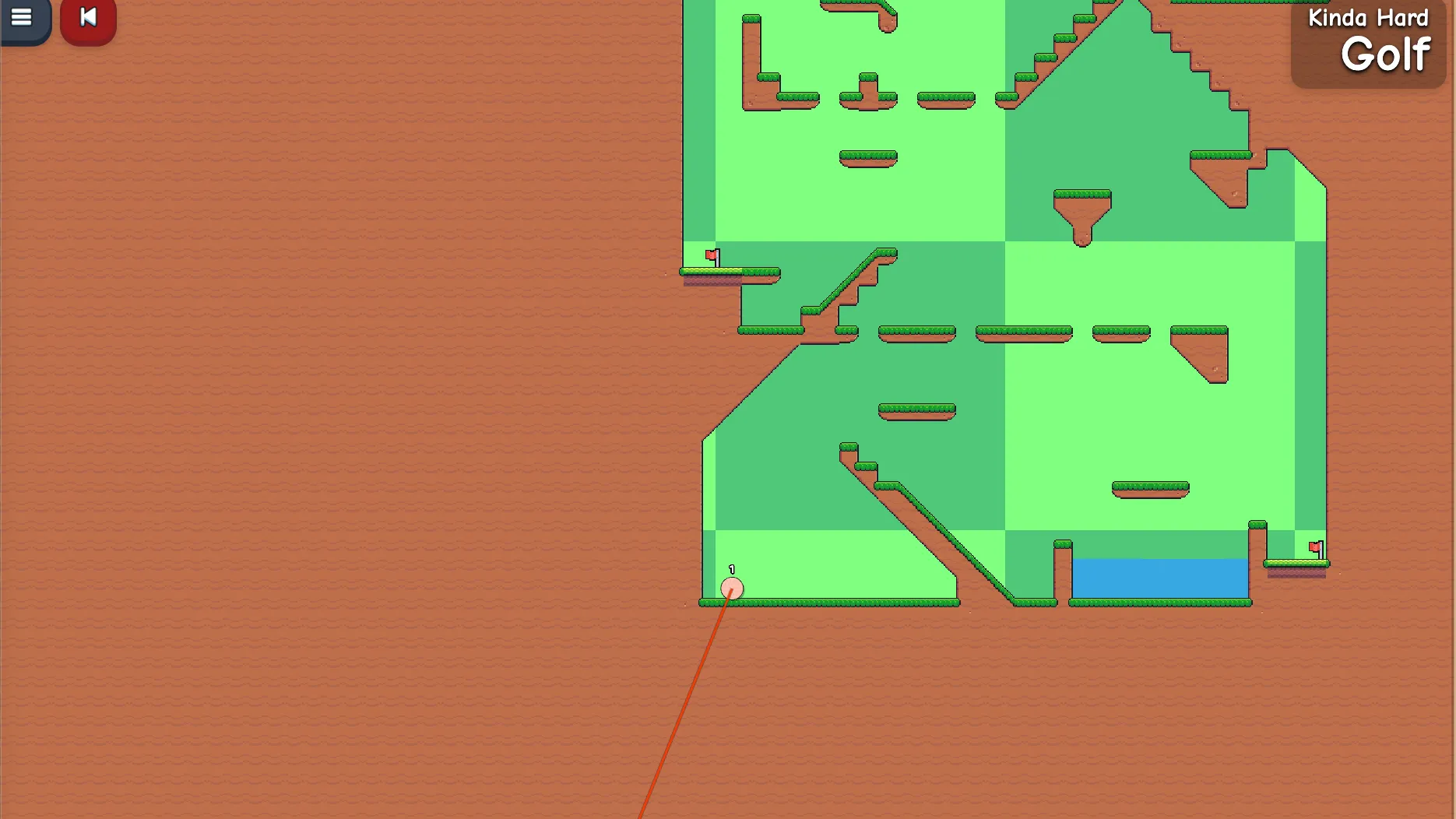
Kinda Hard Golf is a free daily browser game that combines golf-style shot planning with physics-based platforming. Instead of playing a traditional horizontal golf course, you guide a ball upward through a compact obstacle course and try to reach the finish using as few strokes as possible.
A new daily course gives players another score to chase, making it closer to a daily skill challenge than a conventional golf simulator. It works on desktop and mobile directly in the browser.
How Kinda Hard Golf Works
The controls are intentionally simple: drag from the ball to aim and set the strength of your shot, then release to launch it. The difficult part is judging trajectory, power, rebounds, slopes, and where the ball will finally come to rest.
Courses are built vertically, so the goal is to keep moving upward until you reach the top. Each shot adds to your stroke count, and the challenge is to finish as efficiently as possible rather than simply reaching the end.
Flags act as checkpoints. Landing on one saves your progress, which is particularly useful when the next section requires a risky shot. There is also a Kinda Infuriating Mode that disables checkpoints for players who want a much less forgiving challenge.
How to Play Kinda Hard Golf
- Study the next platform. Before shooting, look at the height, nearby walls, slopes, obstacles, and possible landing areas.
- Drag to aim your shot. Pull from the ball in the direction and strength needed, then release to launch it.
- Use walls and terrain. Some sections are easier when you deliberately bounce the ball off a surface instead of attempting a direct shot.
- Reach checkpoints. Try to land on flag checkpoints so a failed shot later in the course does not erase as much progress.
- Reach the top with fewer strokes. Once you understand the course, replay it and look for cleaner routes that reduce your total shot count.
Example of the Core Mechanic
Imagine the ball is sitting on a small platform with another ledge above and to the right. A maximum-power shot may send the ball past the ledge, while a weak shot falls short. The challenge is finding the right combination of angle and power so the ball lands safely instead of bouncing back down the course.
Later sections can require bank shots, controlled rebounds, or carefully reducing power so the ball stays on a narrow platform. This precision is where the "Kinda Hard" name starts to make sense.
Strategy Tips
- Prioritize safe landings. A slightly longer route can be better than repeatedly attempting one extremely difficult shortcut.
- Think about the bounce. Reaching a platform is not enough if your momentum immediately carries the ball off the other side.
- Use checkpoints strategically. When a flag is available, securing it before attempting a risky shortcut can save a frustrating restart.
- Adjust power before angle. If a shot has roughly the correct direction but overshoots, make a small power adjustment rather than completely changing your aim.
- Learn from failed shots. Because the physics are consistent, a miss usually gives useful information about the angle or strength required on the next attempt.
- Replay the daily course. Your first completion teaches you the layout; later attempts are where lower scores and more ambitious routes become practical.
Daily Courses and Custom Maps
Kinda Hard Golf is built around a rotating daily hole, giving everyone a shared course to play and compare. The game also has a map editor that lets players build custom levels, save them, share them, and submit creations that may eventually appear as daily levels.
Community-created courses can include additional terrain such as rough surfaces and ramps, extending the game beyond the standard daily challenge.
Is Kinda Hard Golf Worth Playing?
Kinda Hard Golf is especially good for players who enjoy short daily games but prefer mechanical skill over trivia or word puzzles. The controls take only seconds to understand, while difficult jumps, narrow platforms, checkpoints, and score chasing give the game considerably more depth than its simple appearance suggests.
It is also easy to play in short sessions: complete today's course once, or keep replaying it while trying to shave strokes from your score.