What Is Nookle?
Nookle is an unofficial daily guessing game built around Animal Crossing. Instead of guessing an English word, you use knowledge of Animal Crossing villagers and items to solve a new puzzle.
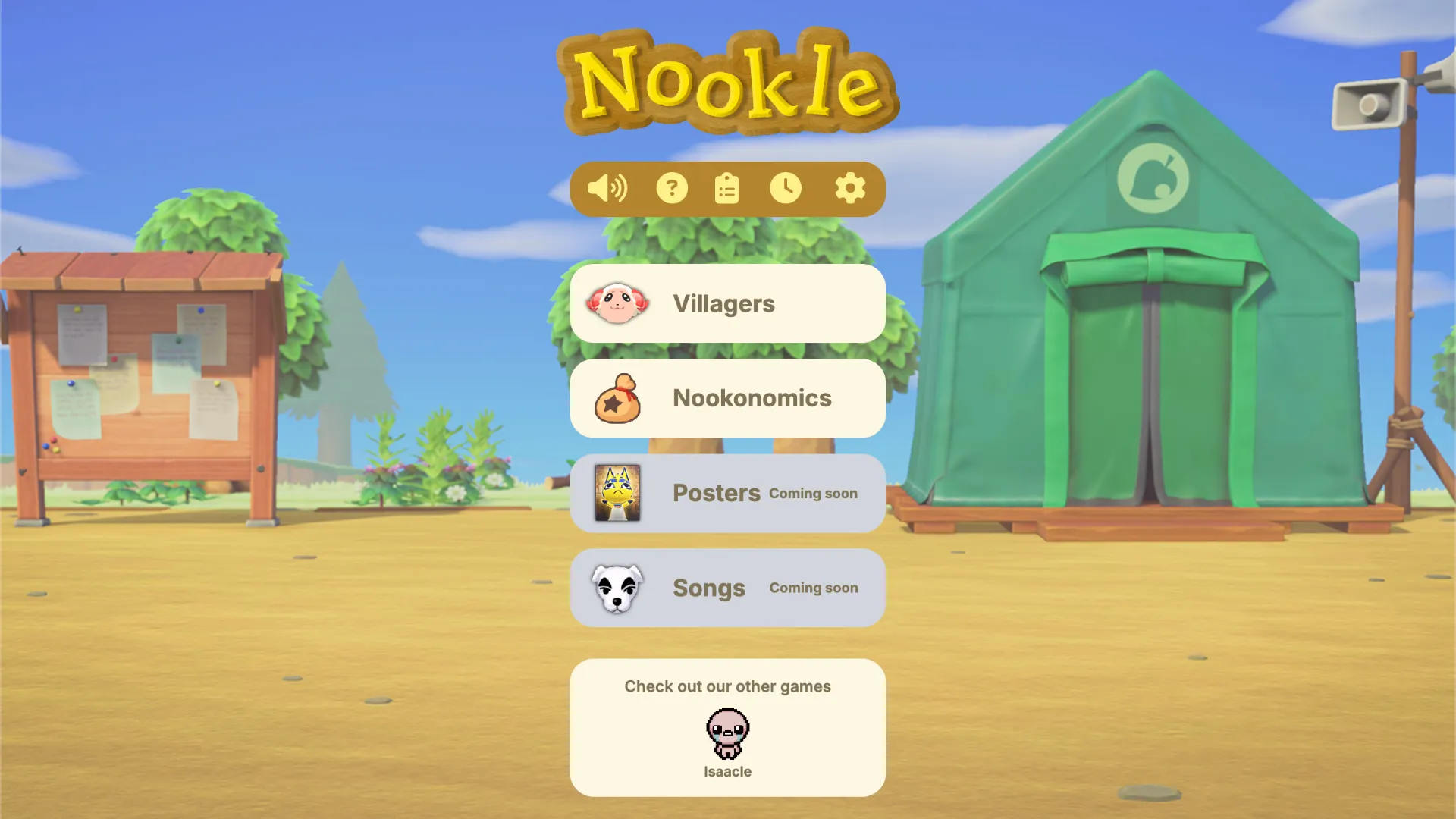
The game currently revolves around two main modes:
- Villagers – identify the mystery Animal Crossing villager by making character guesses and comparing their attributes with the answer.
- Nookonomics – guess the buy price of an Animal Crossing item in Bells, using higher-or-lower feedback to close in on the correct value.
The official site also lists additional modes such as Posters and Songs as coming soon. Nookle is an independent fan project and is not sponsored or endorsed by Nintendo.
How the Villagers Mode Works
Villagers is Nookle's character-deduction challenge. Start by entering an Animal Crossing villager. Your guess is compared with the hidden villager across several traits, including details such as species, personality, hobby, star sign, and preferred styles.
Matching information helps eliminate large parts of the villager roster. For example, if your guess has the correct species but the wrong personality, you can focus your next attempt on other villagers of that species. Style feedback can also show partial overlap when a guessed villager shares one of the target's preferred styles.
A simplified example might look like this:
| Guess | Species | Personality | Hobby | Star Sign | Style |
|---|---|---|---|---|---|
| Rosie | Match | Miss | Miss | Miss | Partial |
That would suggest keeping Rosie's species while testing villagers with different personalities, hobbies, birthdays, and style combinations.
How to Play Nookle
- Choose a mode. Open Nookle and select Villagers for the character puzzle or Nookonomics for the item-price challenge.
- Make an opening guess. In Villagers, select a villager you know well. In Nookonomics, enter an estimated Bell price for the day's item.
- Read the feedback carefully. Villagers compares your character's attributes with the mystery villager. Nookonomics tells you whether the correct price is above or below your guess.
- Narrow the possibilities. Keep attributes that match and change the ones that do not. For prices, progressively tighten the range between your previous guesses.
- Find the daily answer. Continue until you identify the villager or land on the correct item price, then return for the next daily puzzle.
Nookonomics: The Price-Guessing Twist
Nookonomics plays differently from the character mode. The target is an Animal Crossing item's buy price in Bells rather than a villager.
Each attempt gives directional information about where the real price sits relative to your estimate. If your guess is too cheap, move upward; if it is too expensive, move downward. This creates a number-search puzzle where knowledge of Animal Crossing's economy can give experienced players a major head start.
For example, if you try 2,000 Bells and learn that the answer is higher, then try 5,000 Bells and learn that it is lower, you have reduced the possible range to somewhere between those values.
Strategy Tips
For Villagers, avoid repeatedly guessing characters with very similar attributes unless the feedback already points in that direction. An opening villager with traits you remember clearly makes the resulting clues much easier to interpret.
Species and personality are particularly useful for cutting down the roster quickly. Once several traits match, switch from broad exploration to searching among villagers that satisfy those known characteristics.
For Nookonomics, treat the puzzle like a higher-or-lower search. Make guesses that divide the remaining price range rather than moving only a tiny amount each time. Players familiar with furniture, clothing, tools, and other Animal Crossing item values can also use approximate price categories to choose a stronger opening estimate.
Nookle is especially enjoyable if you already recognize a large portion of the Animal Crossing cast, but the clue system means you do not need to know every villager from memory to make progress.