What is Stacks?
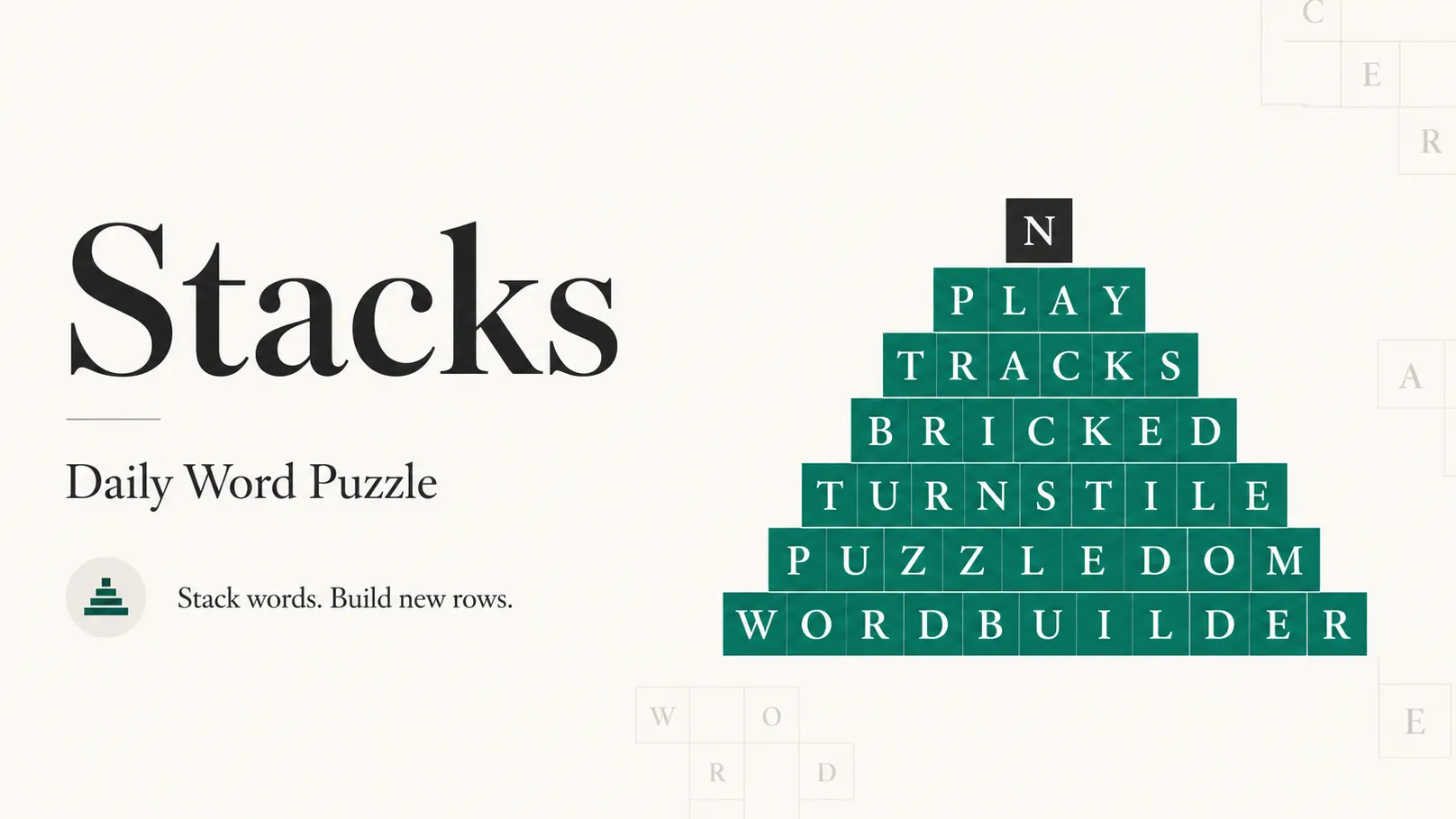
Stacks is a daily word game from The Atlantic where you place given words on top of each other in a grid. The goal is to drop the words in the right order and position so they create valid new words going horizontally.
It is fun because it combines vocabulary with spatial logic. You are not just finding words; you are deciding where each word should land, how letters should line up, and which placements will unlock the correct horizontal answers.
Stacks Game Rules
- Each puzzle gives you a set of words to place.
- You drop words into a grid one at a time.
- Words must be stacked in an order and position that creates new words going across.
- The placement of one word affects the possible words formed by later placements.
- You need to think about both word meaning and letter alignment.
- The puzzle is solved when the stacked layout forms the required valid horizontal words.
- New Stacks puzzles are released daily as part of The Atlantic Games.
How To Play Stacks?
Player Action: Look at the available words before placing anything.
Game Response: The game shows the words that need to be stacked into the puzzle area.
What You Learn: You can compare word lengths, repeated letters, and likely crossing points.Player Action: Choose a word and decide where to drop it.
Game Response: The word lands in the grid and begins forming letter combinations with other rows.
What You Learn: Placement matters because letters must help create new horizontal words.Player Action: Test how another word fits above or below the existing stack.
Game Response: The grid starts showing whether the stacked letters can produce sensible across words.
What You Learn: Some positions may look possible at first but block the final solution later.Player Action: Adjust the order or position of the words if the layout does not work.
Game Response: New alignments reveal better word combinations.
What You Learn: The puzzle depends on finding the right sequence, not only the right vocabulary.Player Action: Finish the stack when every required horizontal word works.
Game Response: The completed layout confirms the solution.
What You Learn: Correct stacking turns separate words into a connected word puzzle.
Strategy & Tips
- Start by comparing word lengths, because length often limits where a word can fit.
- Look for unusual letters first; letters like Q, X, Z, J, or V can make placement easier to identify.
- Pay attention to repeated letters, since they may create useful alignment clues.
- Do not place words only by instinct. Check what new horizontal words the placement would create.
- Try to identify anchor words that seem likely to belong near the top or bottom of the stack.
- If the puzzle gets stuck, change the order of placement rather than forcing one layout.
- Think of Stacks as both a word puzzle and a grid puzzle: the answer depends on vocabulary and structure.
Stacks FAQ
Is Stacks free to play?
Stacks is available on The Atlantic Games page. Check the official game page for the current access and play options.
What kind of game is Stacks?
Stacks is a daily word puzzle with placement logic. You stack words in a grid to create new horizontal words.
How do you play Stacks?
You choose the given words, drop them into position, and arrange them so the stacked letters form valid words across the grid.
Is Stacks like Wordle?
Stacks is a daily word game like Wordle, but the gameplay is very different. Instead of guessing one hidden word with color feedback, you solve a placement-based word grid.
Is Stacks good for beginners?
Yes. The idea is easy to understand, but the best solutions require careful alignment, trial, and word-pattern thinking.
Final Take
Stacks is a smart choice for players who enjoy daily word puzzles but want something more spatial and strategic than a standard guessing game. Try it if you like wordplay, grid logic, and the satisfying moment when separate words lock into one clean solution.