What Is Common Three?
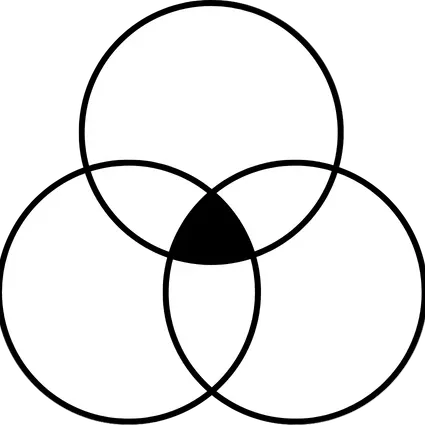
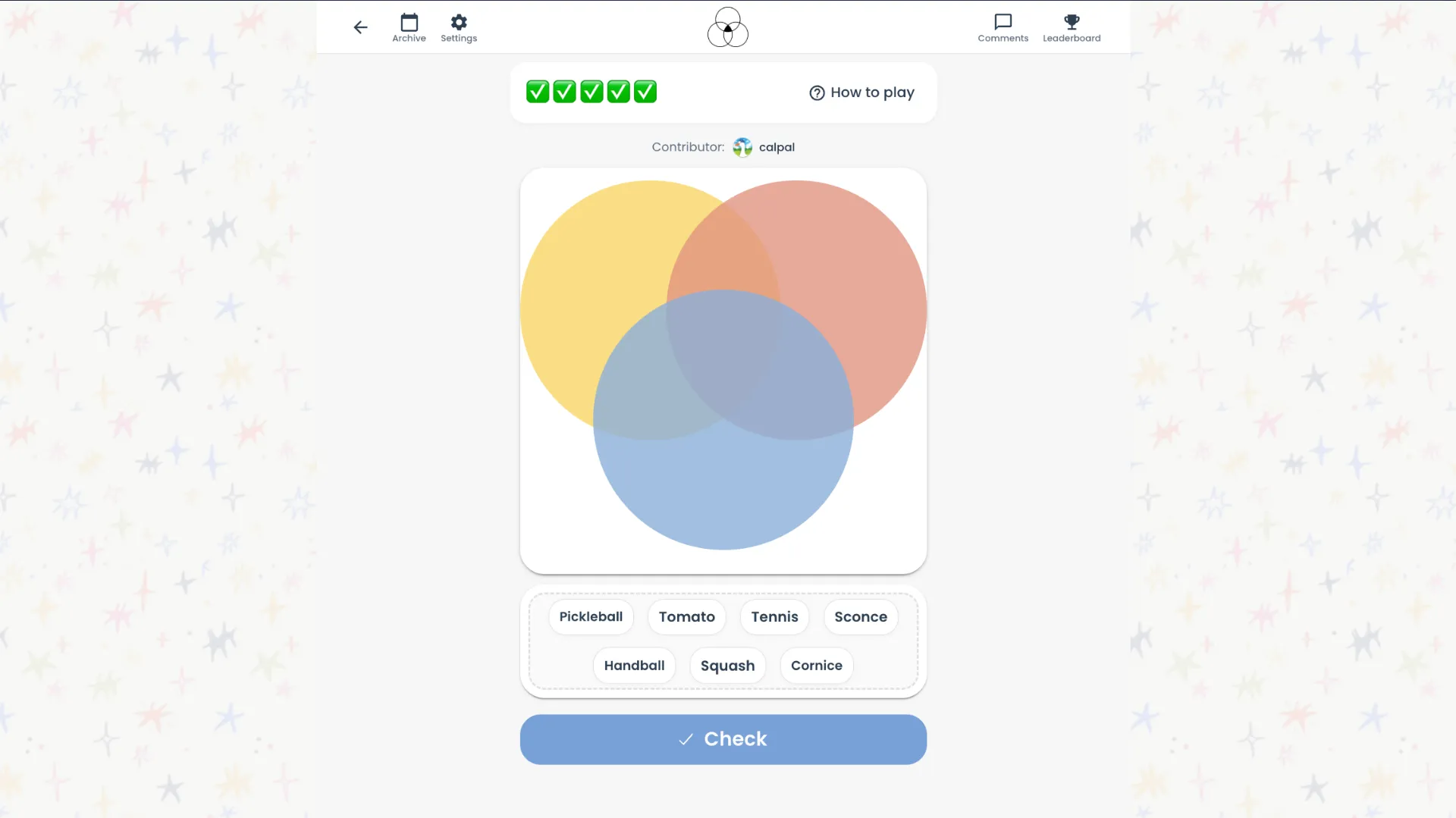
Common Three is a free daily word-grouping game from Ponder Club. Each puzzle gives you seven words and three category themes, displayed as three overlapping circles in a Venn diagram.
Your job is to drag every word into the region where it belongs. A word may fit only one category, sit in the overlap between two categories, or belong in the center because it matches all three.
That overlap mechanic is what separates Common Three from standard category-grouping games. Instead of simply finding several independent groups, you have to think about how each category interacts with the other two.
A new puzzle appears every day at midnight Pacific Time, and past puzzles are available through the game's archive.
The Core Twist and Rules
The board contains three overlapping circles. Together, they create seven meaningful regions:
- Category A only
- Category B only
- Category C only
- Categories A + B
- Categories A + C
- Categories B + C
- All three categories
There are also exactly seven words to place, so understanding the overlaps is essential.
For example, imagine the three themes are Kitchen Tools, Made of Metal, and Has Handle. A word such as Coins might belong only to Made of Metal, while Hammer could fit Made of Metal + Has Handle. A word such as Ladle could potentially belong in the center if it matches all three themes.
You drag the words into the Venn diagram and check your arrangement. Common Three gives you five mistakes to spare, so an incorrect attempt does not immediately end the puzzle.
How to Play Common Three
- Read all three category labels first. Before moving anything, think about what each category includes and where the categories could overlap.
- Place the obvious single-category words. If one word clearly belongs to only one circle, drag it into that circle's non-overlapping section. This reduces the possibilities for the harder words.
- Work through the overlaps. Look for words that satisfy exactly two themes, then consider which word could logically satisfy all three categories and belong in the center.
- Check the full arrangement. Once all seven words are positioned, submit the board. If something is wrong, use the feedback and your remaining mistakes to rearrange the uncertain words.
Example of the Venn Diagram Logic
Suppose the categories are:
Kitchen Tools | Made of Metal | Has Handle
A possible board could require reasoning like this:
- Blender → Kitchen Tools
- Coins → Made of Metal
- Umbrella → Has Handle
- Colander → Kitchen Tools + Made of Metal
- Mug → Kitchen Tools + Has Handle
- Hammer → Made of Metal + Has Handle
- Ladle → Kitchen Tools + Made of Metal + Has Handle
The important part is not simply recognizing that a word matches a category. You must decide exactly which combination of the three categories describes it.
Strategy Tips
- Start with the extremes. Words that clearly belong to only one category are usually easier to place than overlap words.
- Save the center for last if necessary. The word matching all three categories often becomes obvious once the six surrounding regions are filled.
- Think about every category before placing a word. A word that obviously matches one theme may also satisfy another, which means it belongs in an overlap instead of a single circle.
- Use elimination. Because there are seven words for seven regions, confidently placing one word can significantly narrow the remaining possibilities.
- Do not rush the Check button. You have five mistakes available, but reasoning through uncertain overlaps before submitting preserves those attempts.
Is Common Three Like Connections?
Both games are based on finding relationships between words, but their structures are different. Connections asks players to divide a larger set of words into separate groups. Common Three uses only seven words and three visible categories, with the challenge coming from correctly placing words into the overlapping parts of a Venn diagram.
That makes Common Three especially appealing if you enjoy category puzzles but want more spatial deduction and less trial-and-error group selection.
Who Should Play Common Three?
Common Three is a good fit for players who enjoy word associations, categorization, logic puzzles, and quick daily challenges. Most of the difficulty comes from spotting subtle category overlaps rather than obscure vocabulary, so it rewards careful reasoning as much as general knowledge.