What is FaceGrid Game?
You’re not guessing a single answer. You’re solving a grid—and every square is a trap.
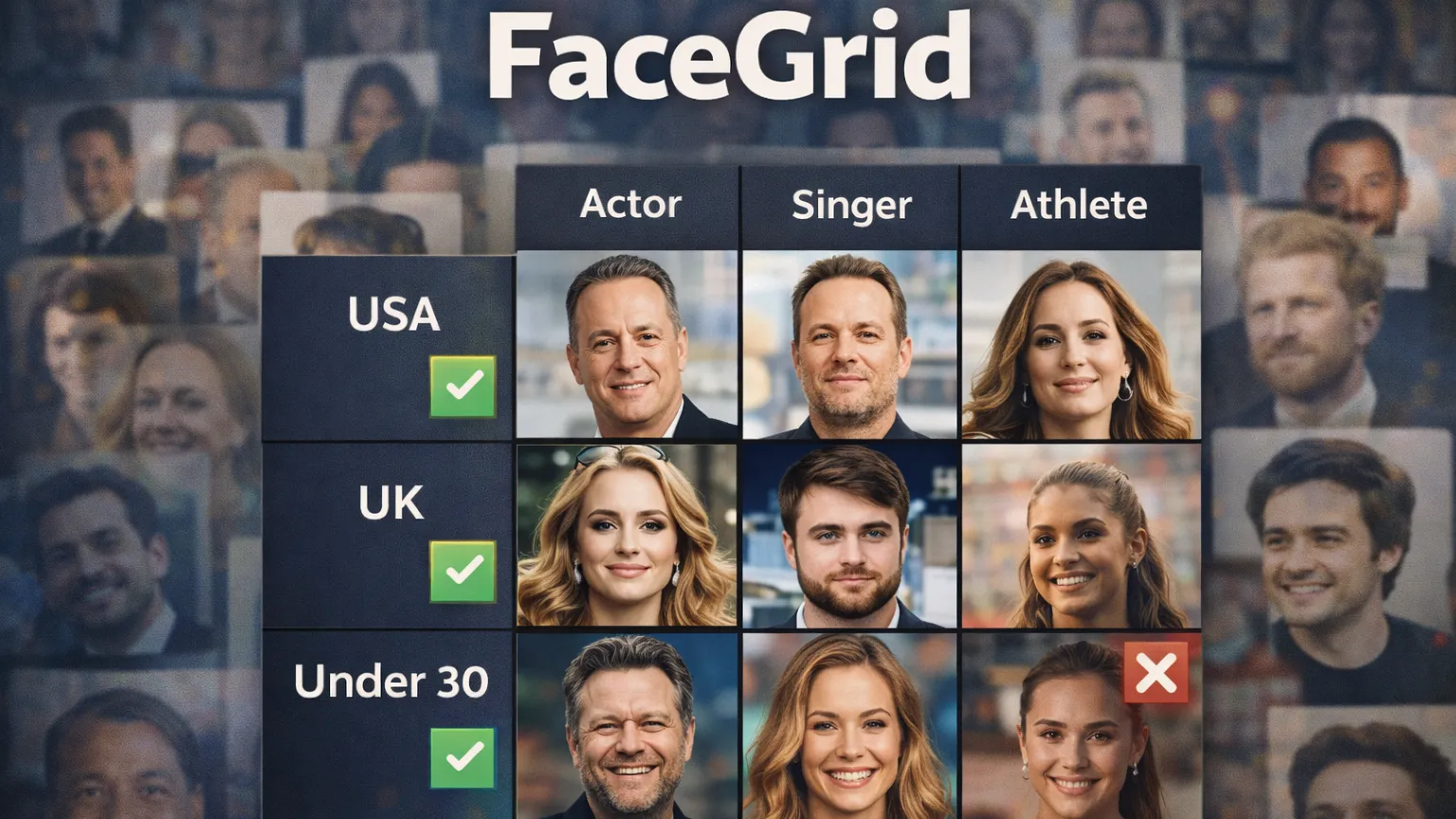
FaceGrid is a daily puzzle where you fill a grid by matching famous people to intersecting categories. Each row and column defines a condition—like “Actor” × “Marvel” or “Athlete” × “USA”—and your job is to find the one person who satisfies both.
It sounds simple… until it isn’t. Because every correct answer locks you in. One mistake doesn’t just cost a guess—it collapses your logic for the entire board.
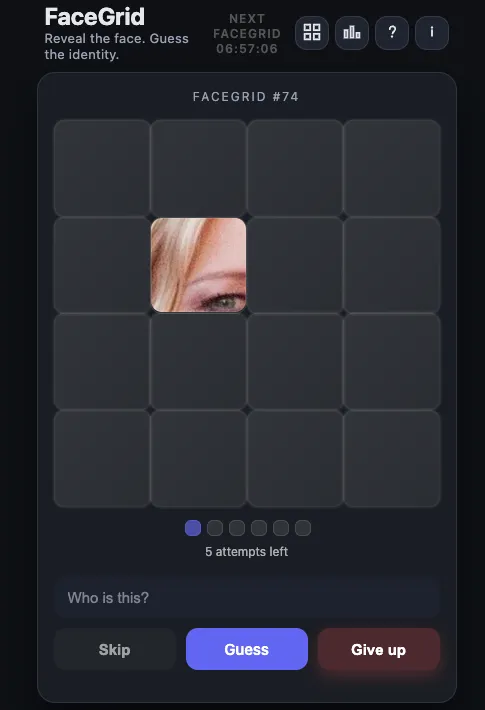
FaceGrid Game Rules (The Catch / The Trap)
- 🧩 Grid-Based Puzzle:
- Usually a 3×3 or similar grid layout.
- Each row and column has a category.
- 👤 Match Faces to Criteria:
- Each cell must satisfy BOTH its row and column labels.
- Example: “Actor” + “DC Universe” → correct celebrity.
- 🔁 Limited Guesses:
- You only get a small number of total attempts.
- 🎯 Unique Answers Only:
- Repeating the same person is FORBIDDEN.
- 🧠 The Trap:
- Some categories overlap heavily
- Obvious answers may block better future options
- One wrong guess wastes both a slot and a chance
How To Play FaceGrid?
Step 1: Read the grid
You see:
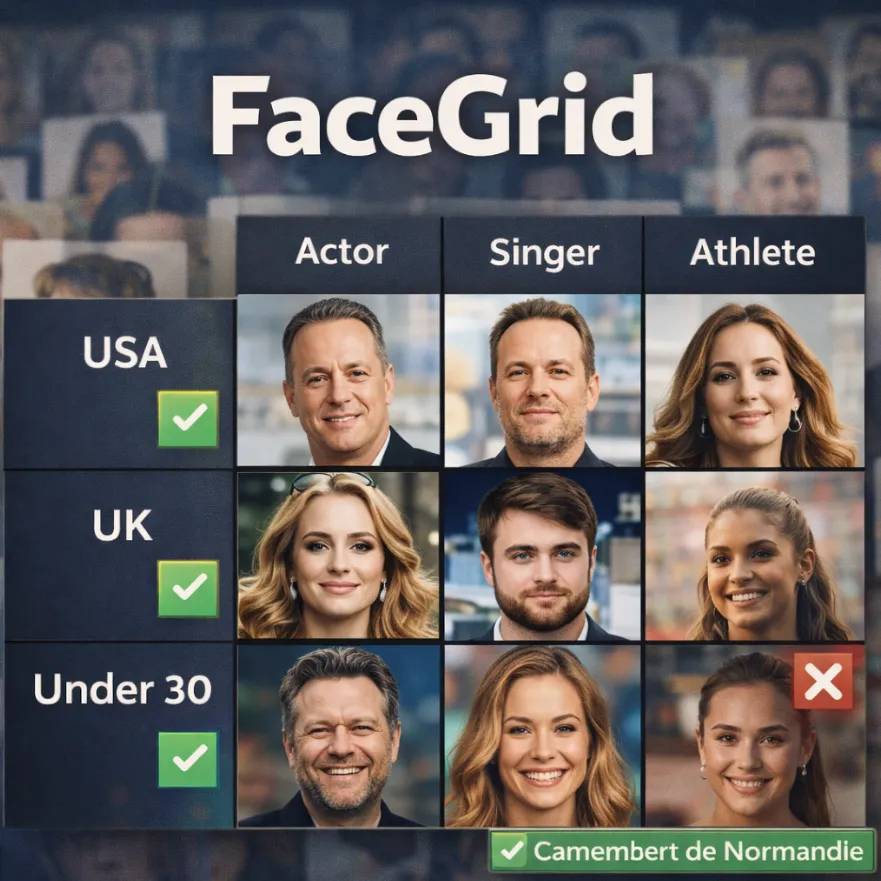
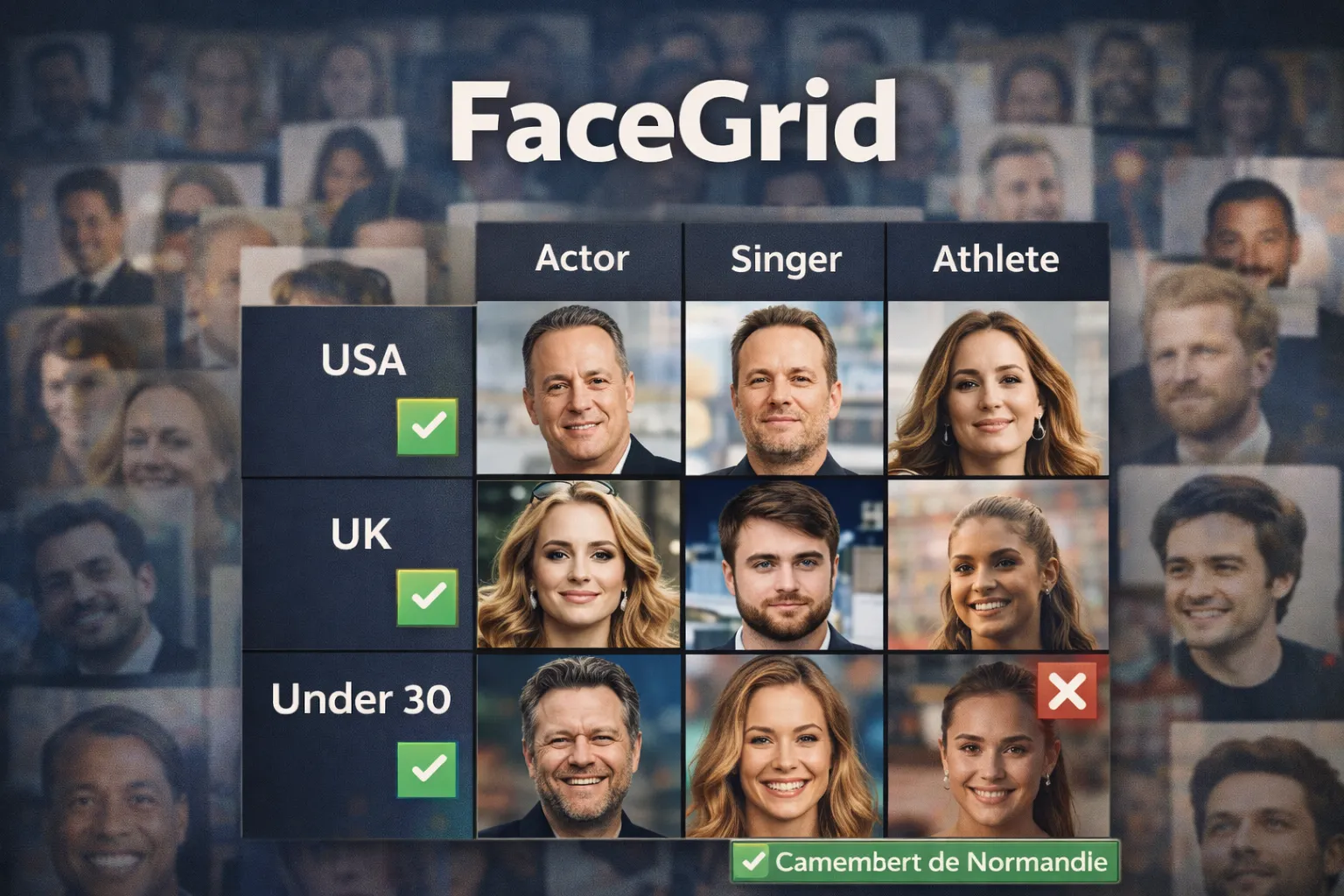
- Columns: “Actor” · “Singer” · “Athlete”
- Rows: “USA” · “UK” · “Under 30”
Step 2: Fill an easy square
Player Picks: “Actor” × “USA” → Tom Hanks
Result: ✅ Correct
What This Means: safe anchor established
Step 3: Attempt a tricky overlap
Player Picks: “Singer” × “UK” → Adele
Result: ✅ Correct
Step 4: Risk a guess
Player Picks: “Athlete” × “Under 30” → guesses wrong
❌ Incorrect
What This Means: fewer guesses remain—pressure increases
Step 5: Finish the grid carefully
You now balance safe picks vs rare overlaps to complete all remaining cells.
Strategy & Tips
- 🧠 Start with obvious anchors: lock in easy intersections first
- 🎯 Avoid burning flexible answers early: some names fit multiple squares
- 🔍 Think in categories, not individuals: filter options before guessing
- ⚖️ Balance risk vs certainty: one wrong guess can ruin the board
FaceGrid is less about knowing names—and more about navigating constraints. Every square is a puzzle. Every decision shapes the rest of the game.