What Is Numgrove?
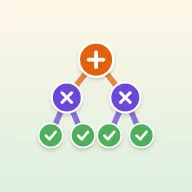
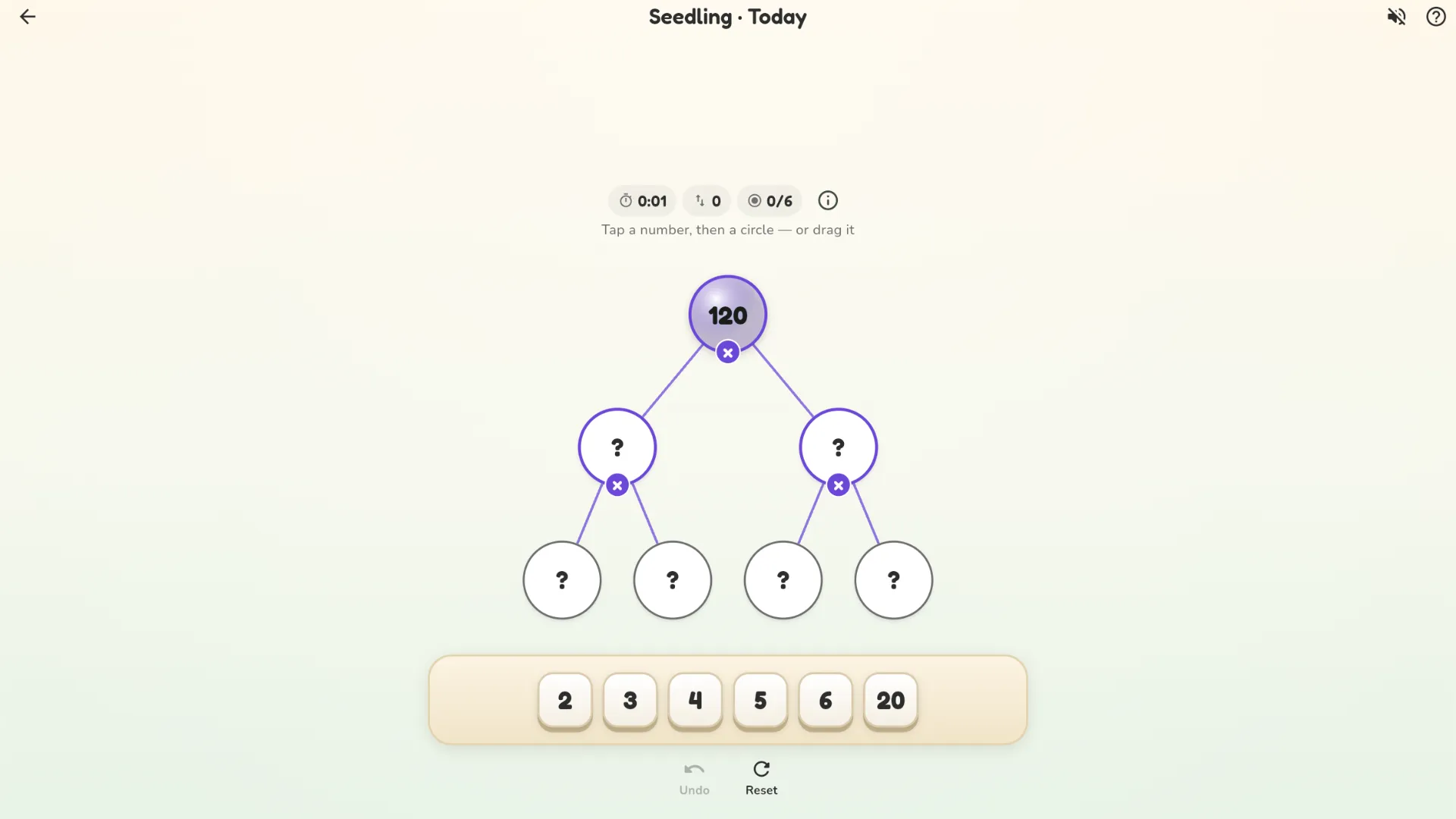
Numgrove is a daily browser-based math puzzle built around a branching number tree rather than a traditional grid. Some values are already revealed, while other spaces are empty. Your job is to place the missing numbers so the arithmetic relationships between connected branches work all the way through the tree.
The central idea is simple: connected numbers must combine correctly using addition or multiplication. That makes Numgrove feel closer to a compact arithmetic logic puzzle than a calculation quiz. You are not trying to answer unrelated equations; each answer affects the structure around it.
Numgrove has three difficulty levels, so you can play a lighter tree or move up to a larger, more demanding puzzle. A fresh set is presented daily, and the game is free to play in a web browser without requiring an account.
The Number-Tree Twist
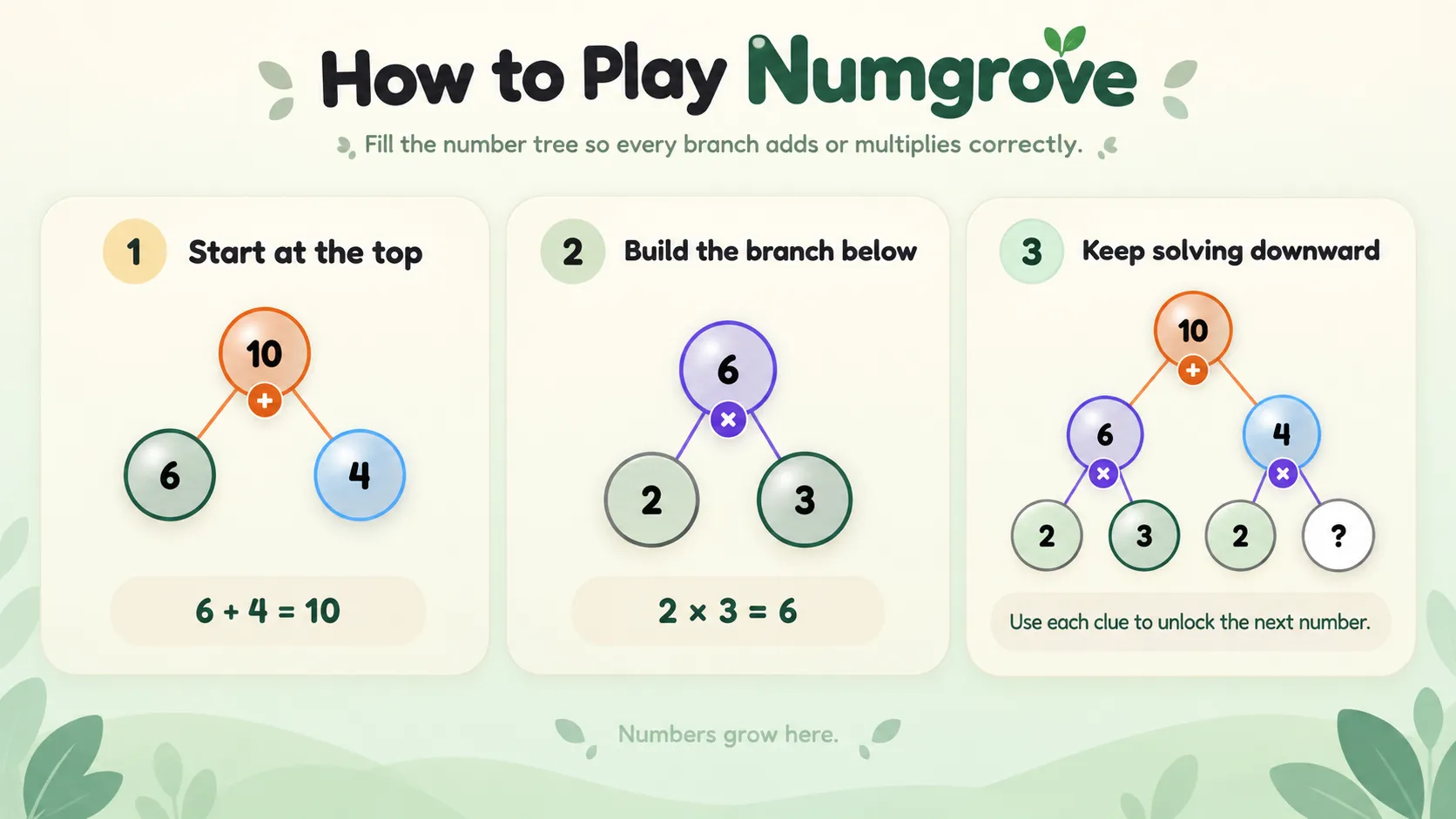
Instead of reading equations from left to right, Numgrove organizes them as a tree. Higher values give you targets, and the branches below must contain numbers capable of producing those targets.
For an addition relationship, imagine a branch leading to 12 with one connected value already known to be 5. The missing value must be 7, because 5 + 7 = 12.
For a multiplication relationship, if the target is 24 and one connected value is 6, the other value must be 4, because 6 × 4 = 24.
The challenge grows when a missing number participates in more than one relationship. A value that looks possible for one branch may become impossible when you check the next branch, so harder trees reward deduction rather than blind trial and error.
How to Play Numgrove
- Choose a difficulty. Start with the smaller tree if you want a quick introduction, or pick a harder level for a denser puzzle with larger numbers.
- Inspect the revealed values and operations. Look for a branch where enough information is already visible to calculate a missing number directly.
- Fill the most certain spaces first. For example, if two child values must add to 15 and one is 9, the other must be 6. If they must multiply to 35 and one is 5, the other must be 7.
- Work through connected branches. Each solved value can provide the clue needed for another part of the tree, so keep checking how your new number affects the surrounding relationships.
- Complete the tree. Continue until every required value is filled and every addition or multiplication relationship is satisfied.
Difficulty Levels
Numgrove currently offers three levels of challenge. The easiest tree is suitable for learning the mechanic or playing with younger puzzle fans, while the harder trees introduce more cells and larger values that require additional arithmetic and cross-checking.
The toughest level can look busy at first, but the intended solving pattern is still the same: identify the branch with the clearest arithmetic relationship, solve it, and use that result to unlock the next one.
Strategy Tips
- Start from the strongest clue. A branch with only one missing value is usually the safest place to begin.
- Use inverse operations. For addition, subtract a known child from the target. For multiplication, divide the target by the known factor when it divides evenly.
- Check neighboring branches before committing. A number may satisfy one equation but conflict with another connected part of the tree.
- Let solved numbers create new clues. Numgrove becomes easier as the tree fills in because each correct value reduces the number of possibilities elsewhere.
- Move up in difficulty gradually. The harder tree uses larger numbers and can require more mental bookkeeping, so learning the visual structure on an easier puzzle first can help.
Who Should Try Numgrove?
Numgrove is a good fit for players who enjoy Sudoku-style deduction, mental arithmetic, daily puzzle routines, or number games that can be finished in a short session. Its tree layout gives the puzzle a different feel from standard equation grids, while the three difficulty levels make it approachable for both casual players and people looking for a tougher daily math challenge.
Because the basic rules rely on addition, multiplication, and logical deduction, it can also work well as a shared parent-and-child puzzle rather than feeling like a formal math exercise.