What Is Unusual Suspects?
Unusual Suspects is a browser drawing game by Neal Agarwal in which you play the role of a police sketch artist. Instead of seeing the character you need to draw, you receive testimony from witnesses and have to translate their descriptions into a recognizable sketch.
Each case gives you multiple witnesses, and their clues gradually suggest the suspect's appearance. The first case, for example, presents three different witnesses—a ship captain, an art critic, and a diner waitress—before asking you to draw the suspect.
The fun comes from the gap between what the witnesses describe, what you imagine, and what the character actually looks like. After submitting the drawing, the game reveals the suspect and evaluates how closely your sketch resembles the intended character.
Rules and Core Twist
You are not trying to select a suspect from a lineup. Your answer is the drawing itself.
The basic loop is:
- Read the available witness testimony.
- Turn those descriptions into visual features.
- Draw the suspect on the game's canvas.
- Submit the sketch when you are satisfied.
- Compare your drawing with the actual suspect and receive the result.
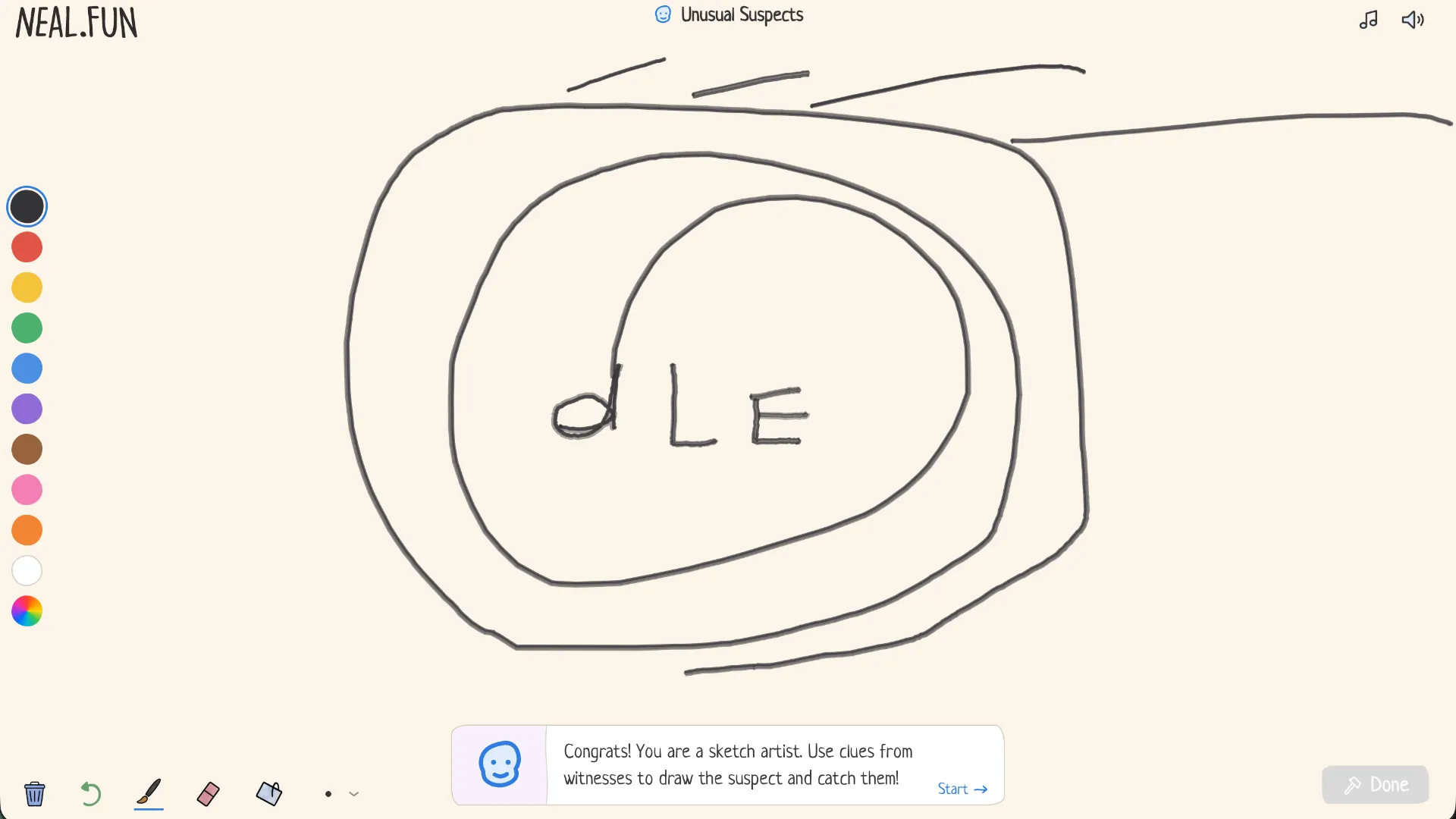
The built-in drawing interface includes different colors and brush sizes along with brush, eraser, fill, undo, and clear tools, so you can construct something more detailed than a simple line doodle.
A typical clue-to-sketch thought process might look like this:
Witness A suggests unusually tall hair.
Witness B remembers a long face and prominent nose.
Witness C describes dark clothing.Your sketch: start with the tall hair silhouette, add the long face and nose, then use the clothing clue as supporting detail.
The descriptions can be oddly specific without simply telling you who the character is, which makes recognition and interpretation as important as drawing skill.
How to Play Unusual Suspects
- Open a case. Read the testimony supplied by the witnesses before drawing anything important.
- Identify distinctive features. Look for clues about silhouette, hair, head shape, facial features, clothing, accessories, or other recognizable details.
- Draw the suspect. Use the brush, colors, fill tool, eraser, and multiple brush sizes to turn those clues into a sketch.
- Submit your drawing. Press Done when you think the suspect is recognizable. The game reveals the actual character and evaluates your attempt.
- Move to the next case. Compare what you drew with the revealed suspect, learn which clues mattered most, and try again with a new set of testimony.
Strategy Tips
Focus first on the features that would make the character recognizable as a silhouette. An exaggerated hairstyle, hat, ears, nose, glasses, or head shape usually communicates more than carefully drawing eyes or tiny facial details.
Treat clues from different witnesses as pieces of the same description rather than separate drawing instructions. When two clues point toward the same feature, prioritize it.
Use color after establishing the main shapes. A correctly colored but badly proportioned sketch may be harder to recognize than a simple outline with the suspect's defining features in the right places.
Finally, don't worry about making polished artwork. Unusual Suspects is entertaining precisely because an imperfect interpretation of the testimony can produce a hilariously different character from the one you were supposed to draw.