What is Glyph?
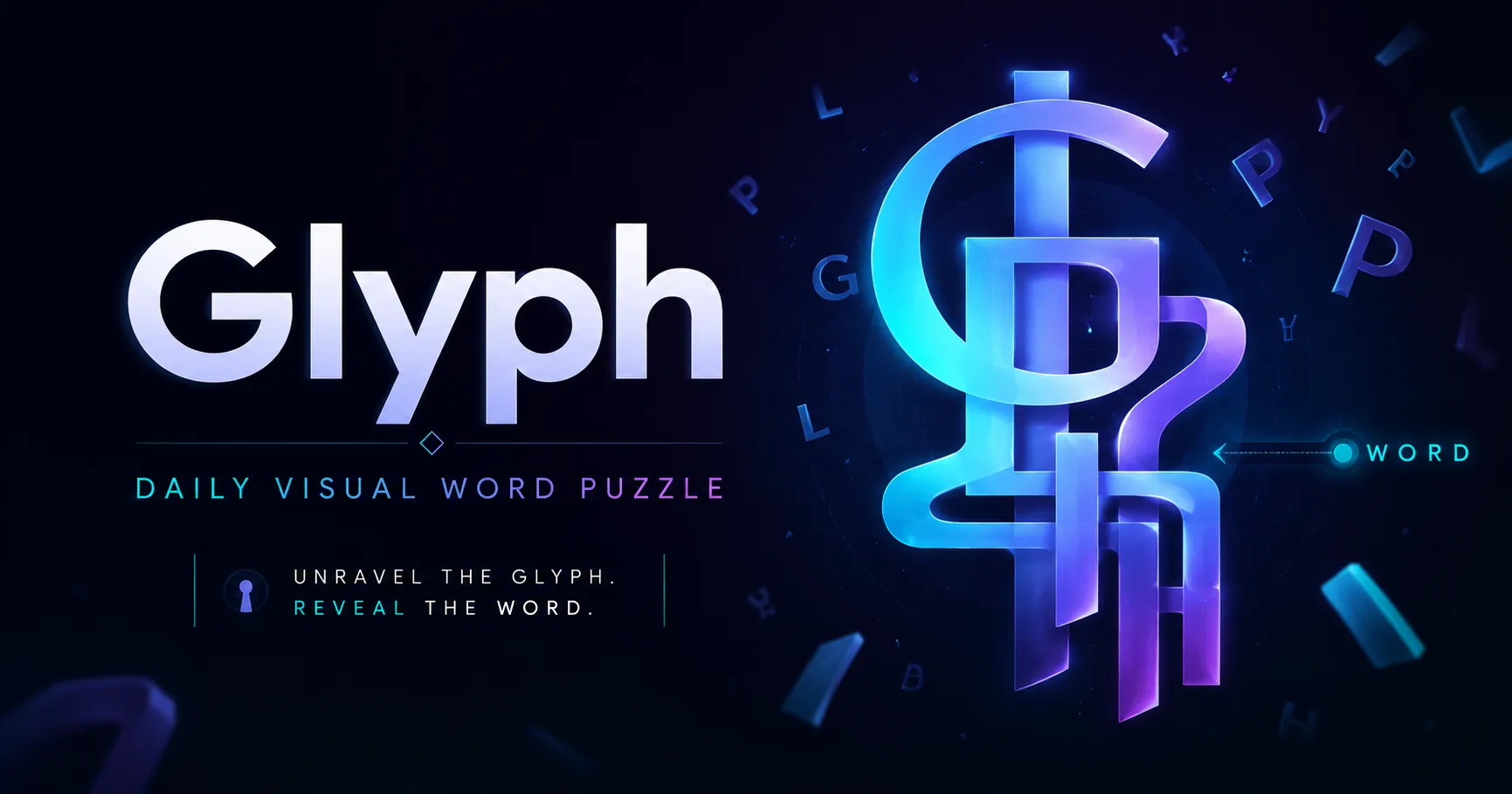
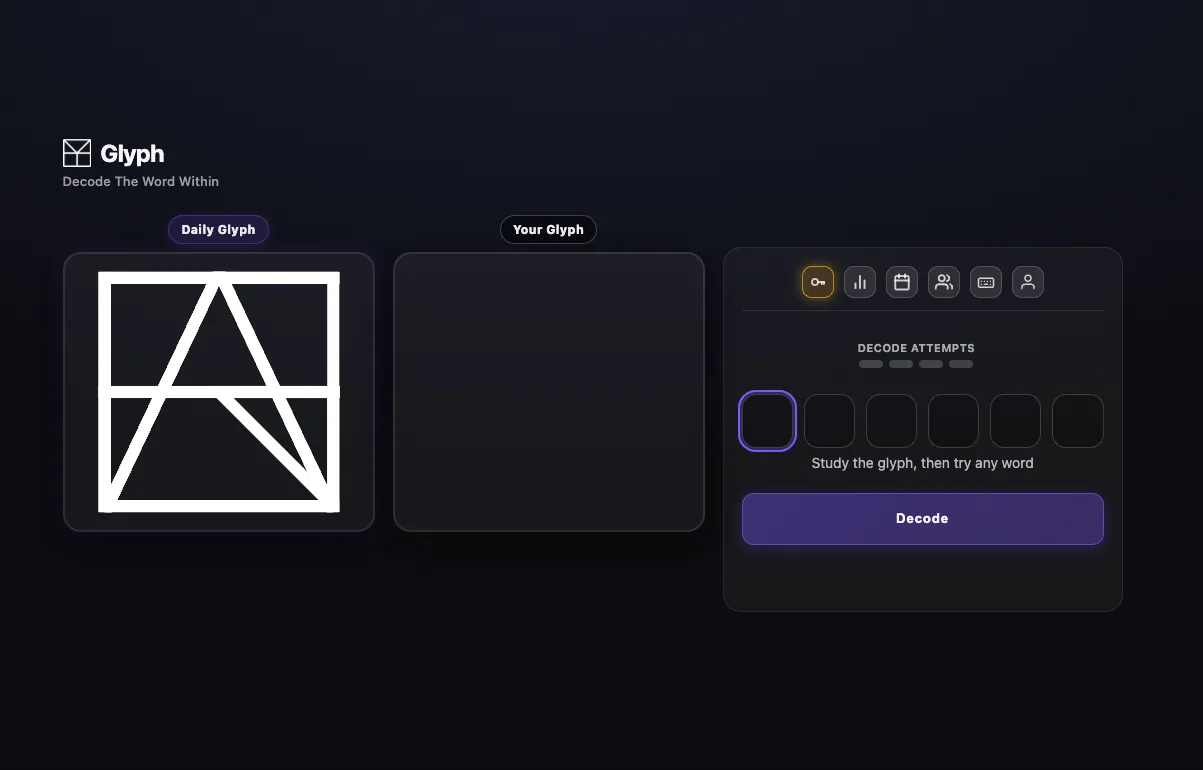
Glyph is a daily word game where the answer is transformed into a single visual glyph made from stacked, overlapping letters. Instead of starting with a blank word grid, you study the shape of the glyph and try to decode the hidden word behind it.
It is fun because it mixes word guessing with visual pattern recognition. You are not only thinking about possible words, but also reading curves, lines, and letter shapes as the glyph slowly becomes easier to understand.
Glyph Game Rules
- Each puzzle hides one word inside a stacked visual glyph.
- The glyph is made from the letters of the answer layered together.
- You enter word or letter guesses to test what might be inside the glyph.
- Correct information helps reveal or simplify the glyph.
- A letter in the right position can disappear from the glyph, making the remaining shape easier to read.
- A guessed letter that appears in the glyph may be highlighted or marked to help you identify it.
- The goal is to decode the hidden word with careful observation and smart guesses.
How To Play Glyph?
Player Action: Look closely at the glyph before guessing.
Game Response: The game shows one tangled shape made from overlapping letters.
What You Learn: Curves, straight lines, tall letters, and repeated shapes can hint at possible letters.Player Action: Make an early guess based on the most visible letter shapes.
Game Response: Glyph gives feedback about whether your guessed letters fit the hidden word.
What You Learn: You start separating real letters from misleading visual noise.Player Action: Use the feedback to adjust your next guess.
Game Response: Correct letters or positions can reduce the glyph's complexity.
What You Learn: The remaining shape becomes easier to read as the puzzle untangles.Player Action: Focus on word structure, not just individual letters.
Game Response: Better guesses narrow the answer faster.
What You Learn: Word length, likely letter positions, and common patterns help solve the puzzle.Player Action: Submit the final word when the glyph makes sense.
Game Response: The puzzle confirms whether you decoded the hidden word.
What You Learn: The full glyph connects back to the stacked letters that created it.
Strategy & Tips
- Start by identifying obvious letter features such as loops, vertical stems, diagonals, or descenders.
- Look for letters that create strong shapes, such as A, M, W, O, G, Y, or T.
- Do not rely only on one visible shape; overlapping letters can create false clues.
- Use feedback to remove impossible letters and focus on the remaining structure.
- Think about common word patterns once you know a few likely letters.
- If the glyph looks crowded, search for repeated strokes that may indicate repeated letters.
- Treat Glyph as both a word puzzle and a visual deduction game.
Glyph FAQ
Is Glyph free to play?
Glyph is presented as a quick daily web word puzzle. Check the official game page for the current play options.
What kind of game is Glyph?
Glyph is a daily visual word guessing game. It combines hidden-word solving with shape recognition.
How do you play Glyph?
You study a glyph made from stacked letters, make guesses, use feedback, and try to decode the hidden word.
Is Glyph like Wordle?
Glyph is similar to Wordle in that it is a daily word guessing game, but its main twist is visual: the word is hidden inside an overlapping glyph instead of a simple letter grid.
Is Glyph good for beginners?
Yes. The basic idea is easy to understand, but the visual clues make it more unusual and challenging than a standard word game.
Final Take
Glyph is a strong choice for players who enjoy daily word puzzles but want something more visual and unusual than a normal guessing grid. Try it if you like decoding shapes, spotting hidden letters, and solving a short puzzle that feels different each day.