
What is Linxicon?
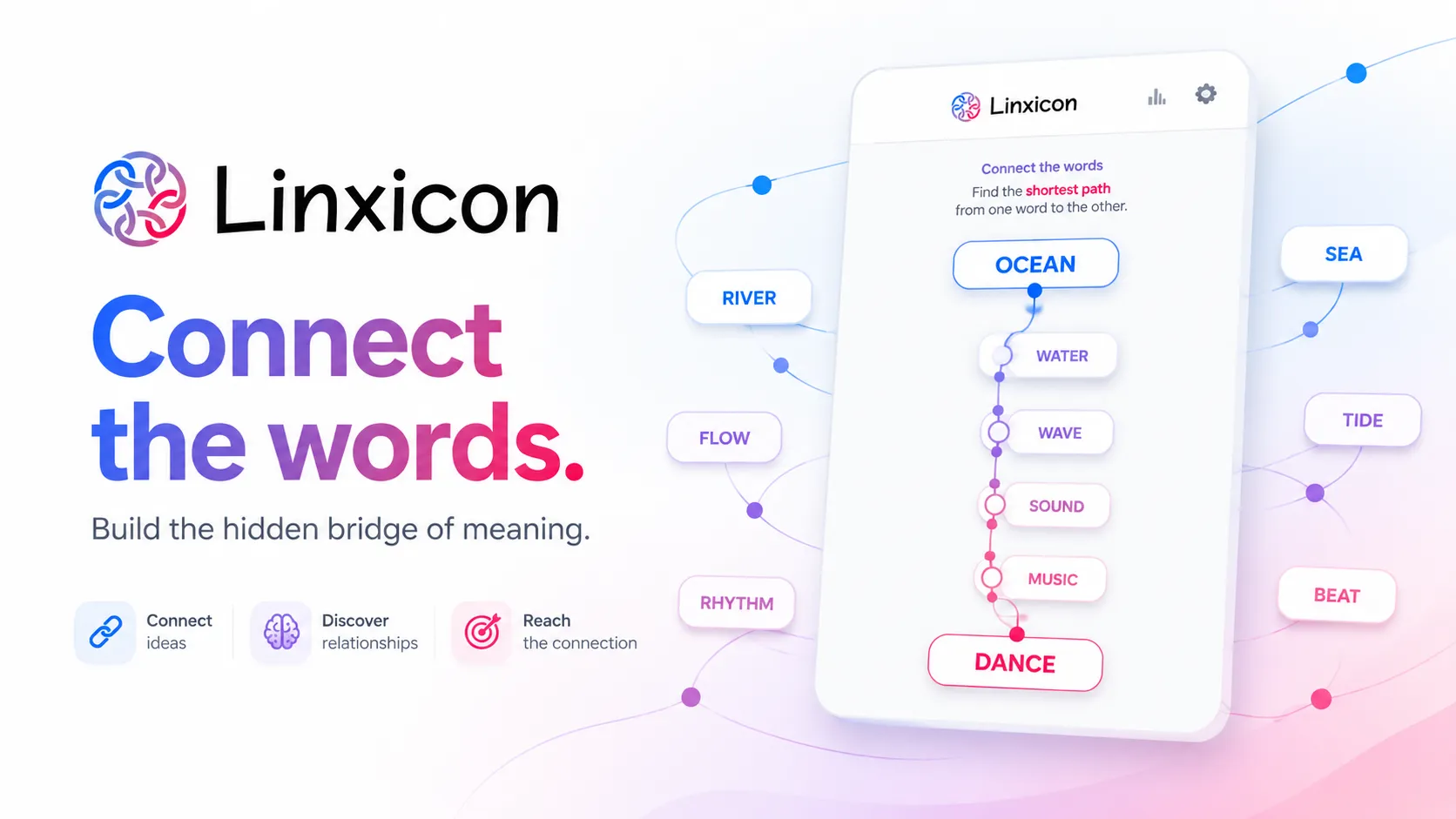
Linxicon is a daily word game about meaning, not spelling. The game gives you two starting words that may feel completely unrelated, and your job is to build a chain of intermediate words that connects them.
The twist is that every word you add has to make semantic sense. You are not filling a crossword or guessing colored letters — you are building a bridge through association, concept, context, and instinct. One word becomes a stepping stone, the next becomes a shortcut, and suddenly two distant ideas are linked.
Linxicon Game Rules (The Catch / The Trap)
The catch in Linxicon is that the board does not care whether your word is clever in your head. It must connect meaningfully to words already on the graph.
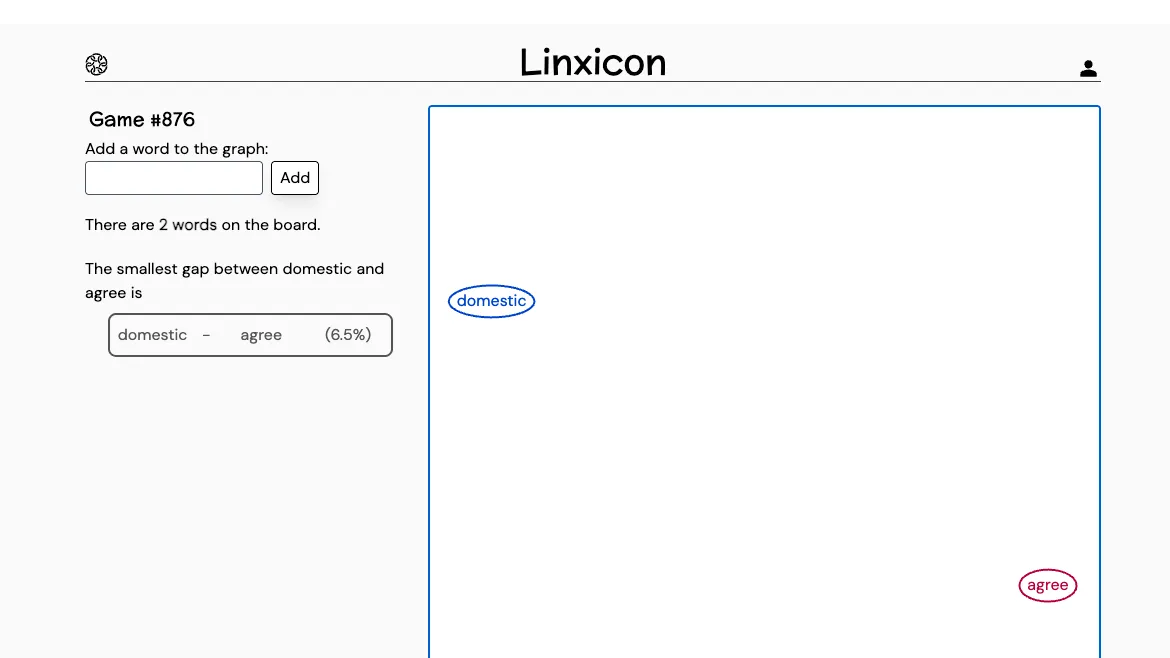
- Two corner words: Each puzzle starts with two target words you need to connect.
- Add bridge words: Type new words that might sit between the two meanings.
- Meaning creates links: If a new word is close enough in meaning to an existing word, the game draws a connection.
- No random word dumping: A word that does not relate strongly enough may appear without helping, or fail to create useful links.
- Goal is a complete chain: You win when your word graph links the two original words.
- Fewer words are better: A short, elegant bridge feels much stronger than a messy web of guesses.
- Daily puzzle plus practice: The main challenge is daily, but practice mode lets you keep experimenting.
Visual idea:
START: ocean
ocean → water → river → bridge → road
TARGET: highway
Every arrow is a meaning link. Your mission is to make the chain hold together before your word web turns into spaghetti.
How To Play Linxicon?
Look at the two target words
Player Sees:musicin one corner andcastlein another.
What This Means: The words are far apart, so you need a semantic route between them.Add a first bridge word
Player Types:sound
Game Response: A line may connectmusictosound.
What You Learn: You now have a starting path, but you are still nowhere nearcastle.Move through nearby ideas
Player Adds:echo, thenhall
Game Response: The graph starts linking words together.
Next Constraint: Each new word should pull the chain closer to the target, not just expand sideways.Search for the crossover word
Player Thinks:hallcan connect topalace, andpalacecan connect tocastle.
Game Response: The missing bridge begins to appear.Complete the chain
Final Path:music → sound → echo → hall → palace → castle
Result: The two target words are linked, and the puzzle is solved.
Strategy & Tips
Start with broad, flexible words. Categories like place, object, action, feeling, person, material, and function often make better bridges than extremely specific guesses.
Do not move straight at the target too early. Sometimes the best route bends through a shared context: doctor → hospital → building → school → student, for example.
Watch the graph, not just the word list. A word that creates multiple links can become a powerful hub, while a lonely word may be a dead branch.
Think in relationships: synonyms, professions, locations, tools, materials, emotions, and situations. Linxicon rewards the player who can ask, “Where would these two ideas meet?”
When stuck, zoom out. The answer is often not a rare word — it is a simple middle concept that both sides can touch.