What is Pancham?
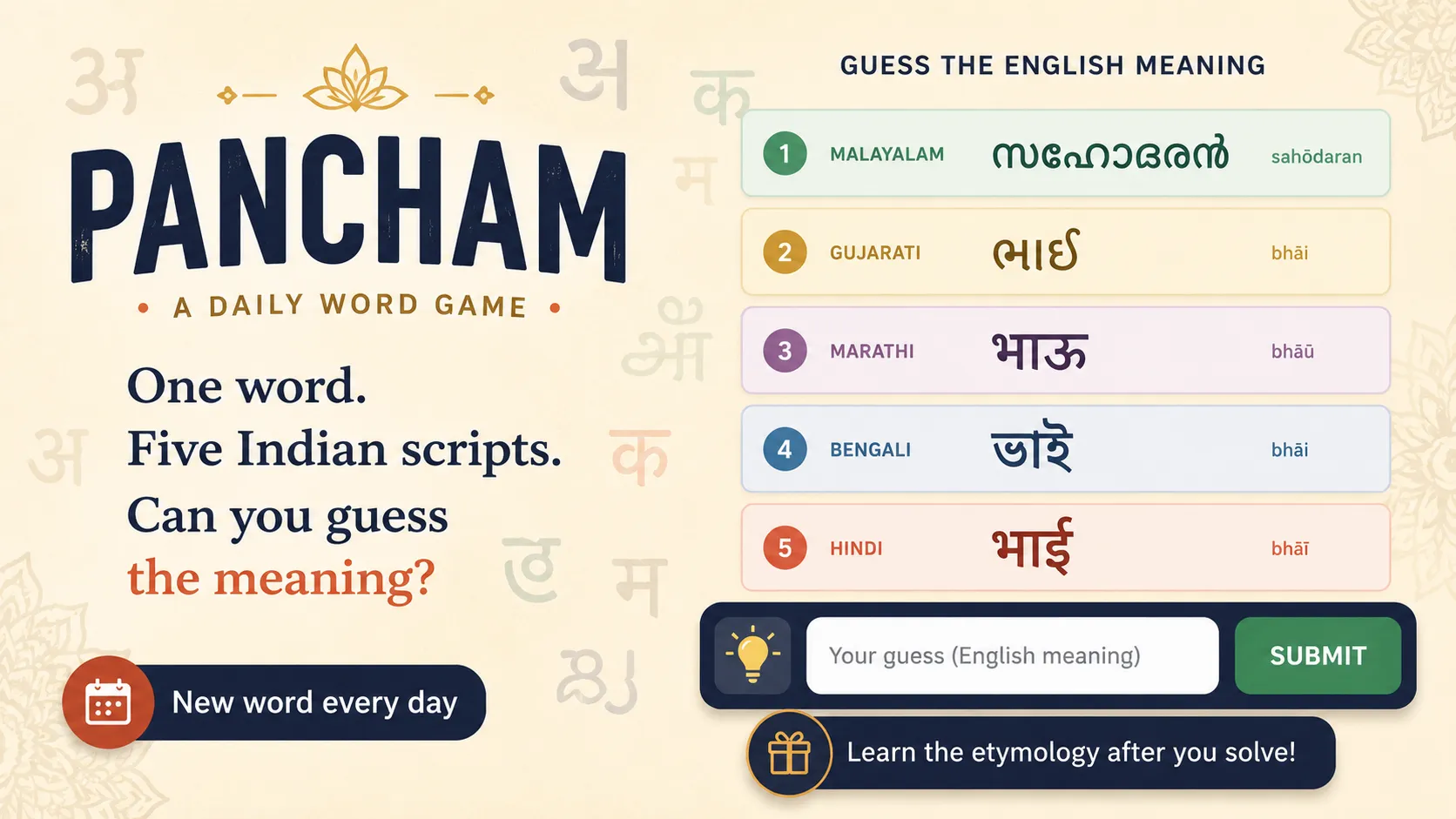
Pancham is a daily word game about recognizing one shared idea through multiple Indian-language clues. Instead of guessing letters like Wordle, you are shown the same word through different scripts and romanizations, then you try to identify its English meaning.
The clever trap is that every reveal feels like both a hint and a test. If you know one script or language, you may get a sudden flash of recognition. If you do not, you start reading shapes, sounds, roots, and patterns like a linguistic detective trying to survive five clues.
Pancham Game Rules (The Catch / The Trap)
The catch in Pancham is that you are not typing the Indian word itself. You are trying to guess what the word means in English, using each script reveal as a clue.
- One daily word: Each puzzle centers on a single word or concept.
- Five Indian-script clues: The word is revealed across five scripts/language forms.
- Hindi is the final hint: The last reveal acts like a stronger lifeline for many players.
- Guess the English meaning: Your answer should be the meaning, not just a transliteration.
- Fewer reveals are better: Solving early feels like a clean linguistic knockout.
- Etymology payoff: After the round, the game gives you a small origin or language-history nugget.
- No signup needed: It is built as a quick daily browser puzzle.
Visual idea:
Clue 1: Malayalam-style script + romanizationClue 2: Gujarati-style script + romanizationClue 3: Marathi / Devanagari-style clueClue 4: another Indian-language formClue 5: Hindi lifeline
Your mission: turn those clues into one English meaning.
How To Play Pancham?
Start with the first script clue
Player Sees: A word shown in an Indian script, usually with a romanized reading.
What This Means: You can use sound, shape, or any language knowledge you already have.Make an early meaning guess
Player Guesses:elder brother
Game Response: The game checks whether your English meaning matches the target.
What You Learn: If you are right, you win early. If not, the word is still hiding.Reveal another language clue
Player Action: Opens the next script/language form.
Game Response: The same word appears through a different linguistic lens.
Next Constraint: More clues help, but each reveal makes the solve less clean.Use the final hint carefully
Player Reaches: The Hindi clue.
What This Means: This can be the rescue rope, especially if the earlier scripts felt unfamiliar.Finish and read the etymology nugget
Result: Whether you solved early or needed all five clues, the final note gives the round its extra flavor: where the word came from, how it traveled, or why it connects across languages.
Pancham Strategy & Tips
Do not treat unfamiliar scripts as useless. Even if you cannot read them fluently, romanization can expose repeated sounds, word endings, and shared roots.
Guess meanings, not spellings. Pancham is about understanding the concept behind the word, so think in synonyms: brother, elder brother, older brother, or big brother may all point toward the same idea.
Save the Hindi clue if you can. Because it is the final lifeline, solving before it feels more rewarding and gives the puzzle its real challenge.
Read the etymology note after each round. That is where Pancham becomes more than a guessing game — it teaches you how words move between languages, scripts, and communities.