What is Semantle?
You type a word… and nothing obvious happens. No green tiles. No yellow hints. Just a number—maybe 3.12, maybe 78.45. What does it mean?
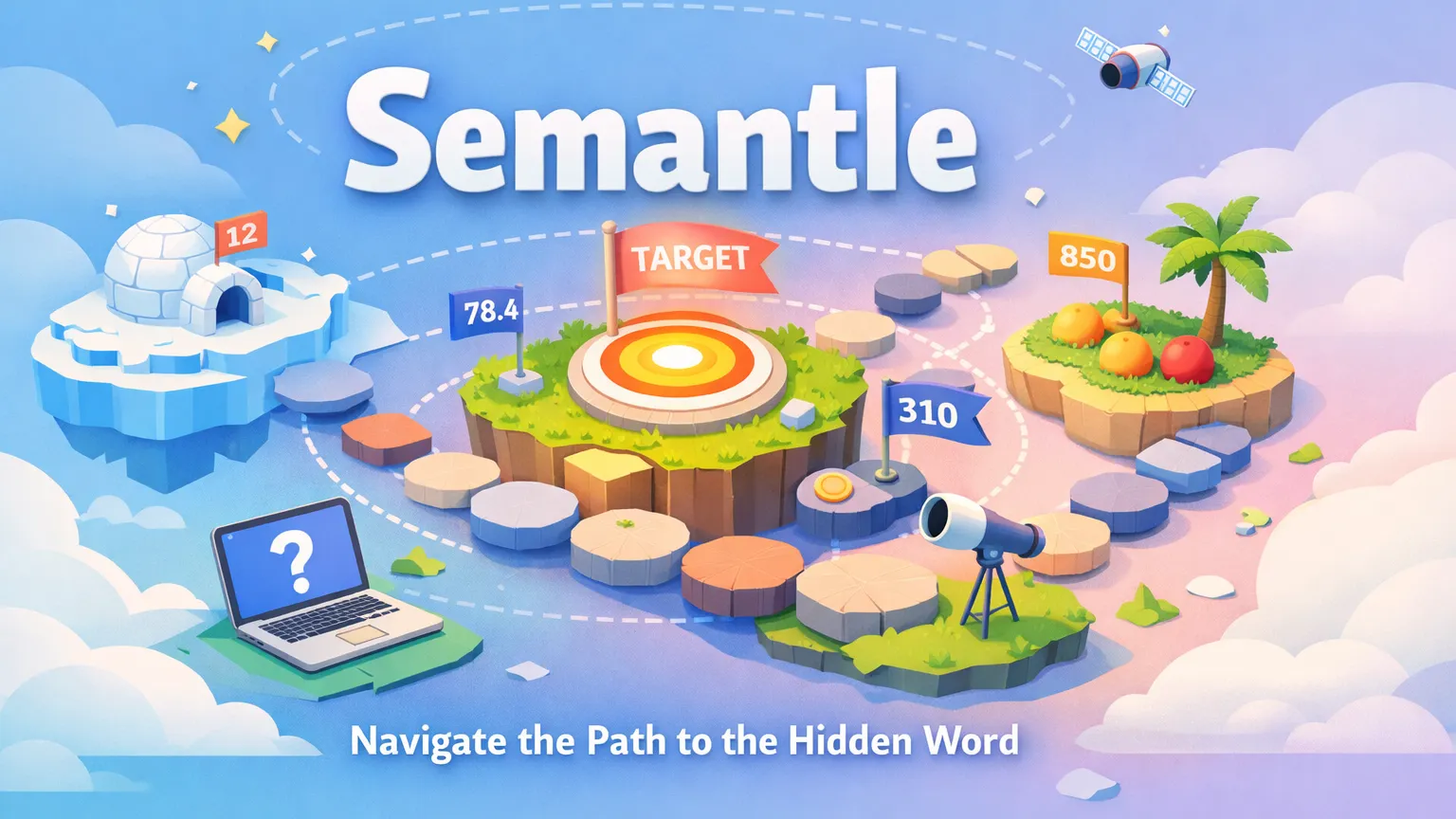
Semantle is a word guessing game built on meaning, not letters. Instead of guessing spelling patterns, you're navigating a hidden landscape of ideas. Every guess is judged by how semantically similar it is to the secret word. You’re not just guessing—you’re orbiting a concept, trying to land on it.
Semantle Game Rules (The Catch / The Trap)
- 🧠 One Secret Word: A hidden target word exists each day.
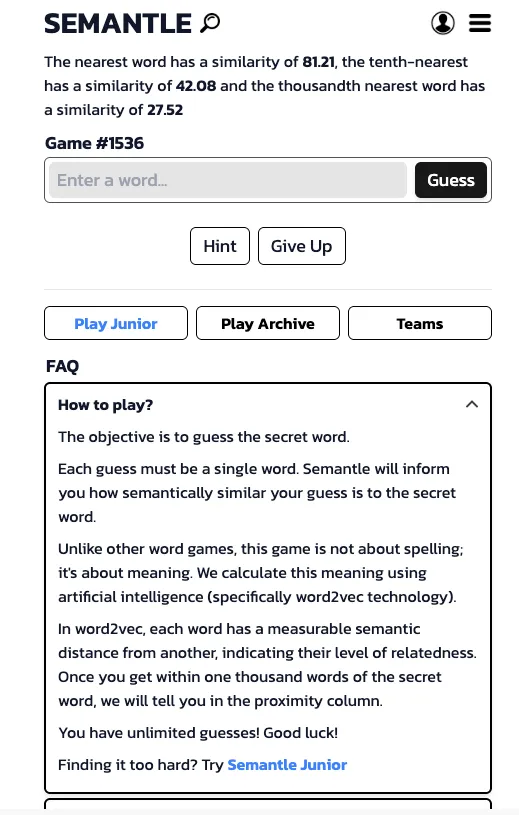
- 🔢 Similarity Score: Every guess returns a number (0–1000 rank or similarity score).
- 🔥 Hot vs Cold Words:
- High score → you're semantically CLOSE
- Low score → you're FAR from the concept
- 🧭 No Letter Hints: You get ZERO feedback about spelling or position.
- ♾️ Unlimited Guesses: You can keep guessing until you find the exact word.
Example feedback:
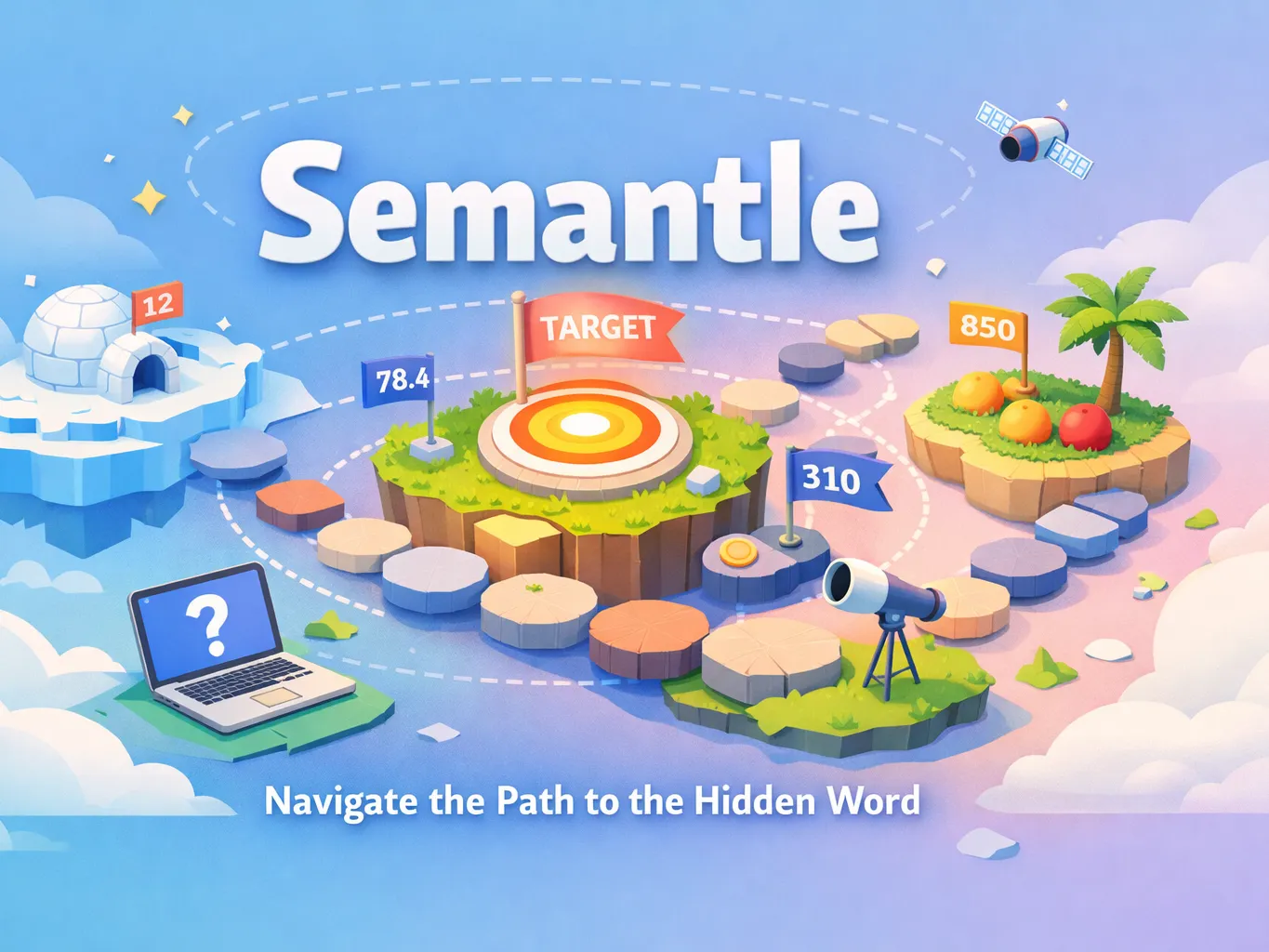
Guess: dog → Score: 850 (🔥 very close)
Guess: animal → Score: 720 (warm)
Guess: car → Score: 12 (ice cold ❄️)
The game doesn’t tell you why you’re close—only that you are.
How To Play Semantle?
Step 1: Start Anywhere
- Player Guesses:
water - Result: Score: 45
- What This Means: You’re far—time to shift direction.
Step 2: Find a Direction
- Player Guesses:
food - Result: Score: 310
- What This Means: You’re getting warmer—category detected.
Step 3: Narrow the Concept
- Player Guesses:
fruit - Result: Score: 780 🔥
- What This Means: You’re very close—focus on specific items.
Step 4: Zero In
- Player Guesses:
apple - Result: Score: 995 🔥🔥
- What This Means: You're almost there—same semantic neighborhood.
Step 5: Final Guess
- Player Guesses:
pear - Result: ✅ Correct!
- What This Means: You found the exact word through meaning, not letters.
Strategy & Tips
- 🧭 Think in clusters: Move through categories (animal → mammal → dog).
- 🔥 Chase high scores: Follow the hottest words—they guide your path.
- 🔄 Pivot quickly: If scores stay low, change direction entirely.
- 🧠 Use synonyms and associations: The game rewards conceptual closeness.
Semantle isn’t about spelling—it’s about thinking. Can you outsmart the meaning itself?