
What is WenWare?
WenWare is a browser history and geography game that asks you to locate a moment in both space and time. Look around a 360° historical panorama, decide where it belongs, and select the year. The scenery gives you clues before the answer is revealed.
It suits players who enjoy studying an unfamiliar scene: buildings, clothing, transport and terrain can each narrow a different part of the answer.
Two guesses make one historical answer
A standard game has five rounds. Each round evaluates your map location and your selected year, so identifying the region is only part of the challenge. The reveal shows your geographical and chronological errors and links to a reference article about the historical moment.
For example, suppose you recognize the right city but select a year 300 years too late. Your location can be accurate while your time estimate still needs work. Conversely, a good estimate of the century does not establish the correct continent. Use the two results to decide which clues you overlooked.
How to play WenWare
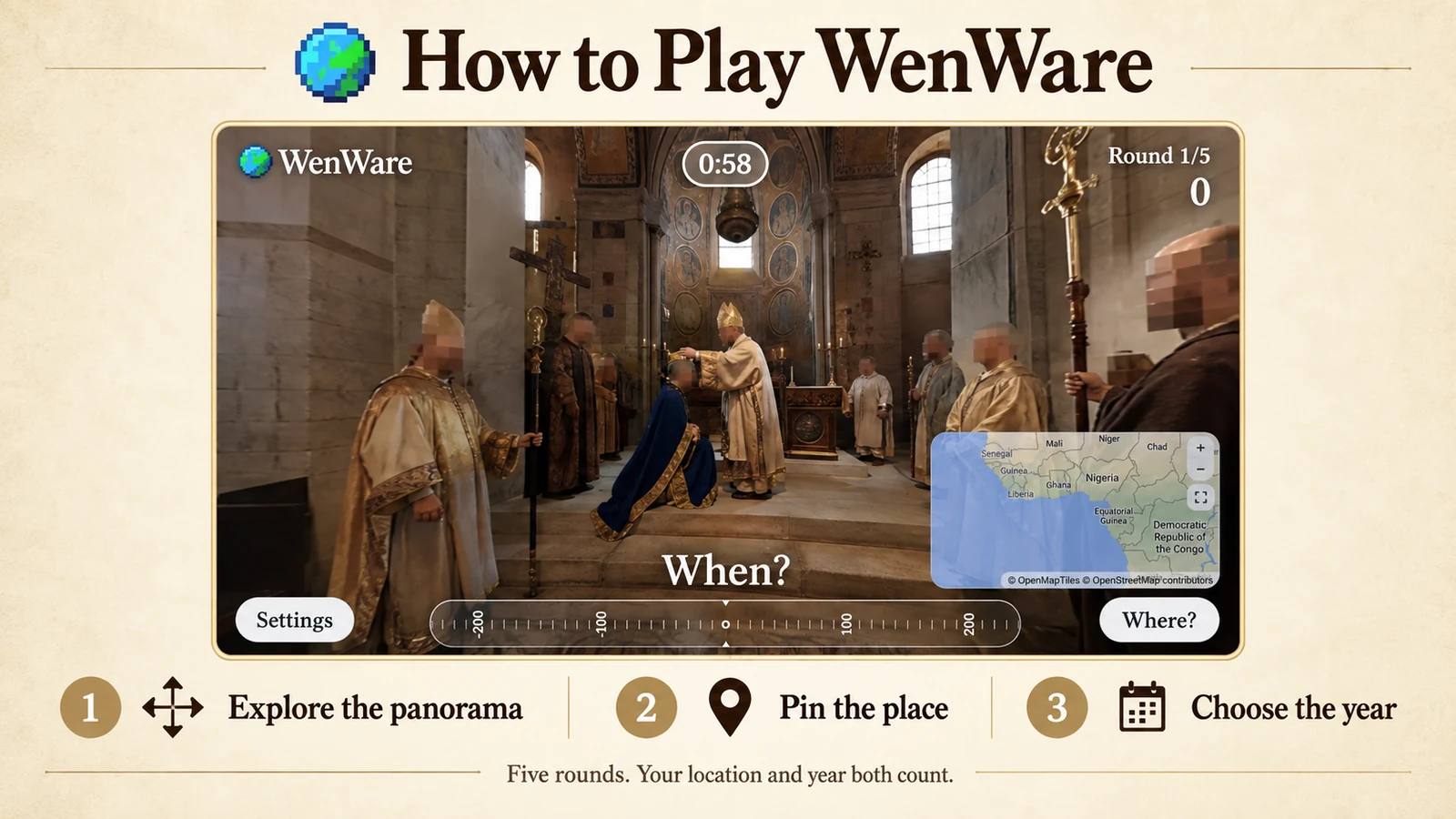
- Open WenWare, choose a mode and route in Settings, then start the game. Singleplayer is a useful first stop.
- Pan around the scene. Compare architecture and landscape with clues such as clothing, tools or vehicles.
- Place a pin on the world map for your location guess.
- Select the year on the timeline and submit before the round timer expires.
- Read the reveal, continue through all five rounds, and compare your combined result.
Daily routes and other ways to explore
The daily game offers a shared five-round route. The site also lists Classic solo, Ranked 1v1, Multiplayer and Party, with Party supporting up to six players. Daily, Ranked and Party require sign-in.
The Archive organizes routes by period, region or theme. The Atlas offers a map and timeline for exploring historical scenes outside the usual guessing sequence.
Tips for reading a panorama
Form a broad hypothesis first, then look for something that could contradict it. A distinctive building may suggest a place, while transport or clothing helps test the era. Avoid making both guesses from one small visual detail.
After an uncertain round, use the linked reference article to check the historical context. The official rules explain how location and year contribute to your result.