
What is Hemiscope Timeline?
Hemiscope Timeline is a historical ordering game. Rather than typing an exact year, you decide where an undated event belongs among events already on the timeline. Each placement gradually gives you more dated reference points.
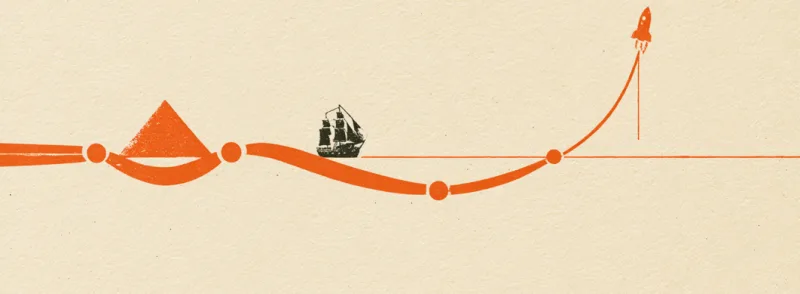
How to play Hemiscope Timeline
- Read the event card and inspect the dated events already on the line.
- Decide which events happened before it and which came after.
- Drag the new event into the appropriate gap, keeping earlier history to the left.
- Check the revealed year. A mistake moves the event to its correct position and costs a life.
- Continue through the remaining cards while protecting your lives; regular play currently presents seven cards and three lives.
Relative dates can be enough
You may not remember an exact year but still know an event belongs after one milestone and before another. That is enough to make an ordering decision. Use broad context such as a war, a technological era or the lifetime of a figure named on the card.
For example, knowing that a particular voyage preceded a later industrial invention may settle their order without knowing either date precisely. This is a reasoning method, not a live card sequence.
Avoid easy chronology mistakes
Read the wording closely: discovery, publication, construction and completion can refer to different moments. With ancient events, remember that a larger BCE year number represents an earlier date. Mentally saying “earlier than” and “later than” can be clearer than comparing the numbers alone.
After a wrong placement, use the correction as a new anchor. It should improve later decisions rather than merely feel like a lost life. Before dropping the next card, review the adjacent events that define the gap.
The Easy setting uses fewer cards and more familiar events. It is a useful starting point if the regular collection feels too broad. The official game belongs to the Hemiscope daily collection, with progress kept in the browser.