
What is WordWavr?
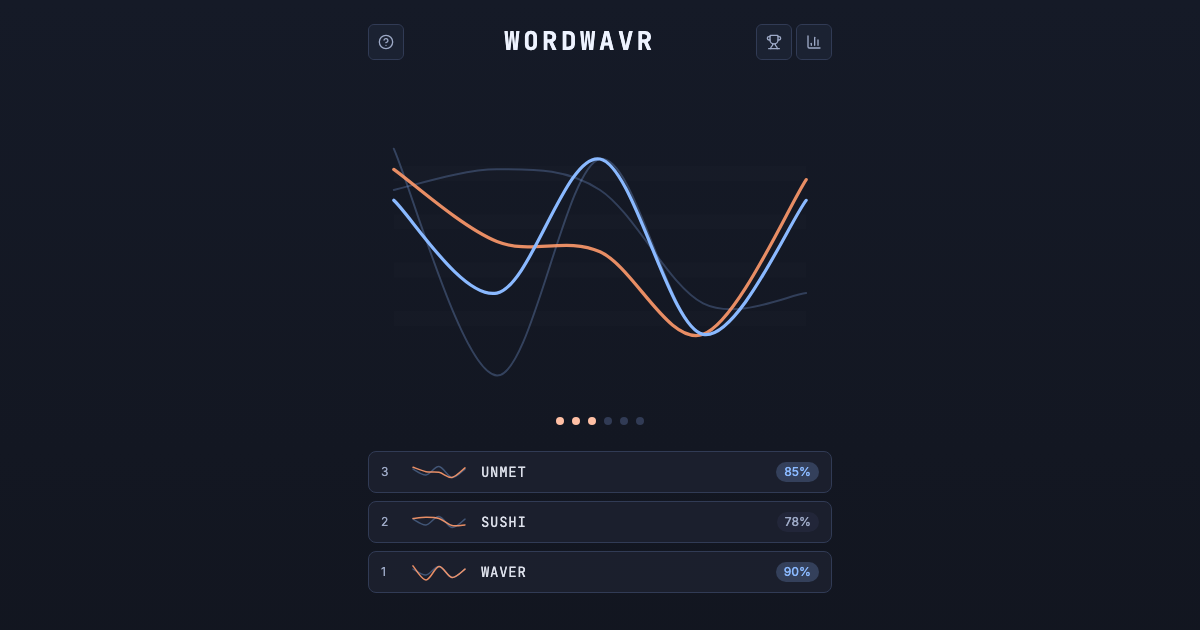
WordWavr turns a hidden five-letter word into a visual curve. Each position along the wave corresponds to a letter, and its height depends on that letter's position in the alphabet. Your job is to identify the word by comparing its shape with the waves produced by your guesses.
The game combines vocabulary with visual reasoning. A plausible word is only a starting point: its rising and falling pattern has to fit the target too.
Reading the wave
The scale uses A = 1, B = 2, and so on through Z = 26. A low point therefore suggests an early-alphabet letter; a high point suggests a later one. The five positions retain their order, so moving a letter to another slot changes the curve.
As an illustrative example, CABIN becomes 3, 1, 2, 9, 14. Its shape falls at the second position, then climbs toward the end. WordWavr overlays your guess with the target and reports a similarity percentage, giving you a broad comparison as well as the individual shape clues.
How to play in six guesses
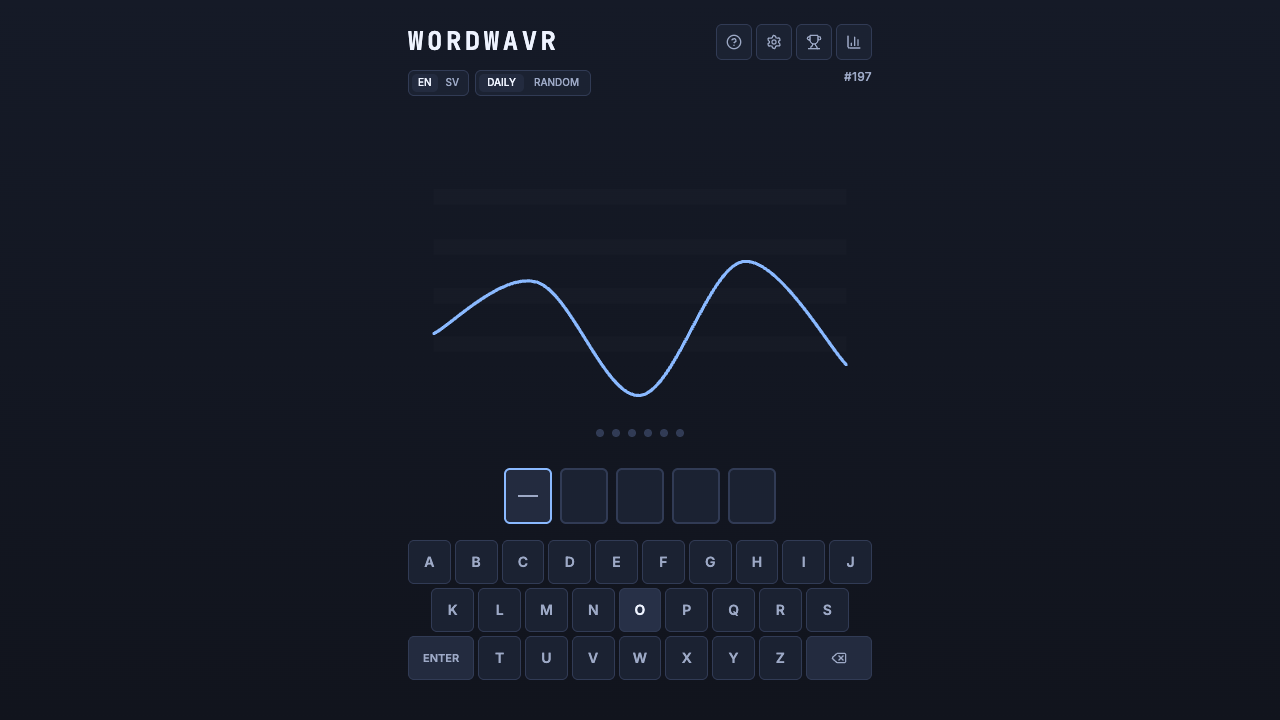
- Start the daily puzzle and inspect the target's five points.
- Choose a valid five-letter word with a roughly similar pattern of high and low letters.
- Submit it and compare the guess wave with the target.
- Identify the positions that are clearly too high or too low, then choose a new word that improves those letters.
- Keep refining until the word matches exactly or the six attempts are used.
Tips for using similarity well
Do not let a strong overall percentage hide one obviously wrong position. A nearly matching curve can still need a substantial change at a single letter. Conversely, keeping several well-matched positions is usually more informative than replacing the whole guess.
Match the contour first, then the precise heights. Daily and random play give you different ways to practise reading the relationship between alphabet values and real words.