
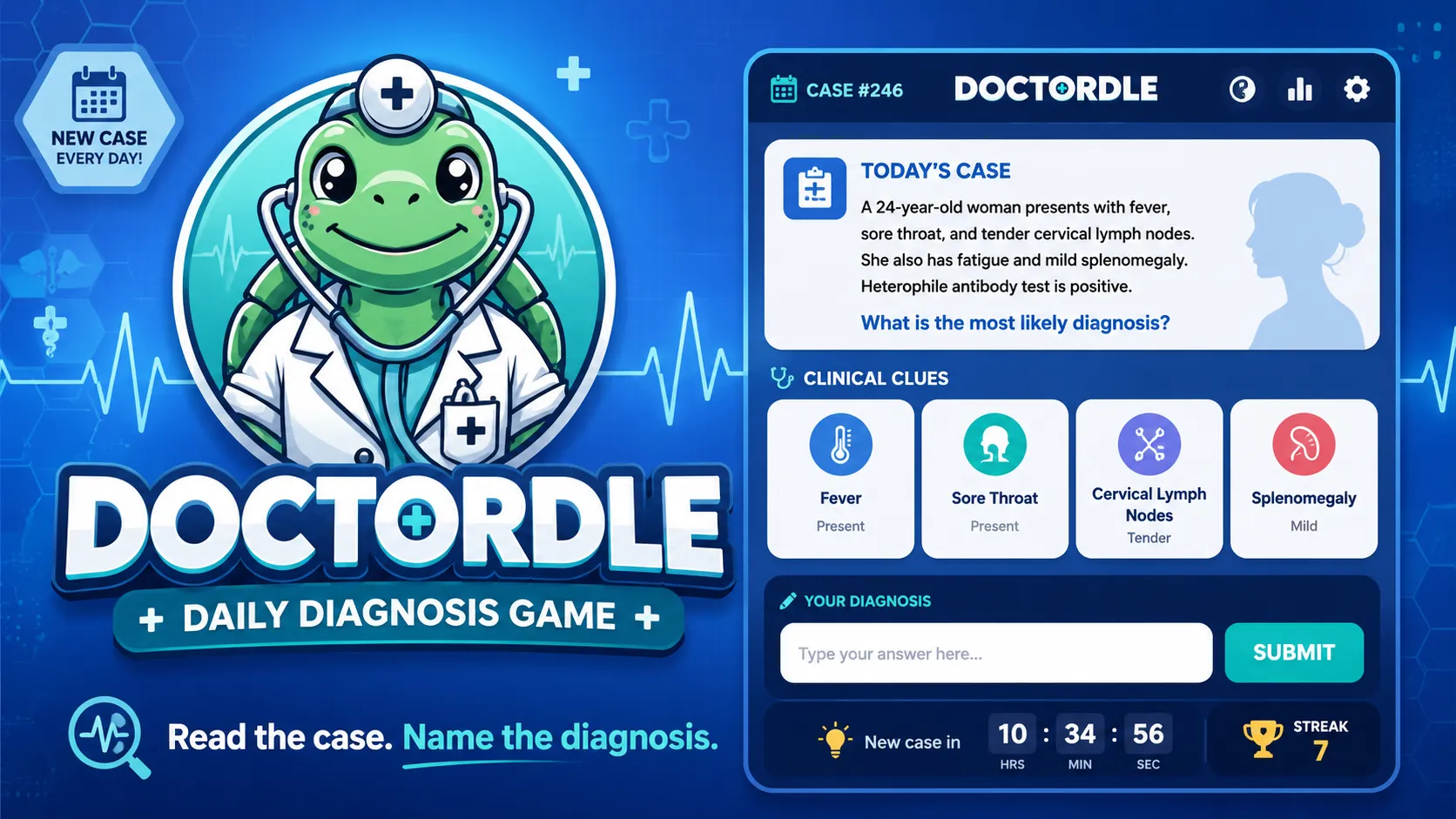
What is Doctordle?
Doctordle is a daily diagnosis guessing game built around short clinical cases. Instead of guessing a hidden word, you read a patient vignette and try to figure out the correct diagnosis before the case gives everything away.
The twist is restraint. You can commit early and look brilliant, or wait for more information and protect yourself from a brutal wrong guess. Every clue changes the differential, so the game feels like a tiny medical mystery where your first instinct might be genius — or a trap.
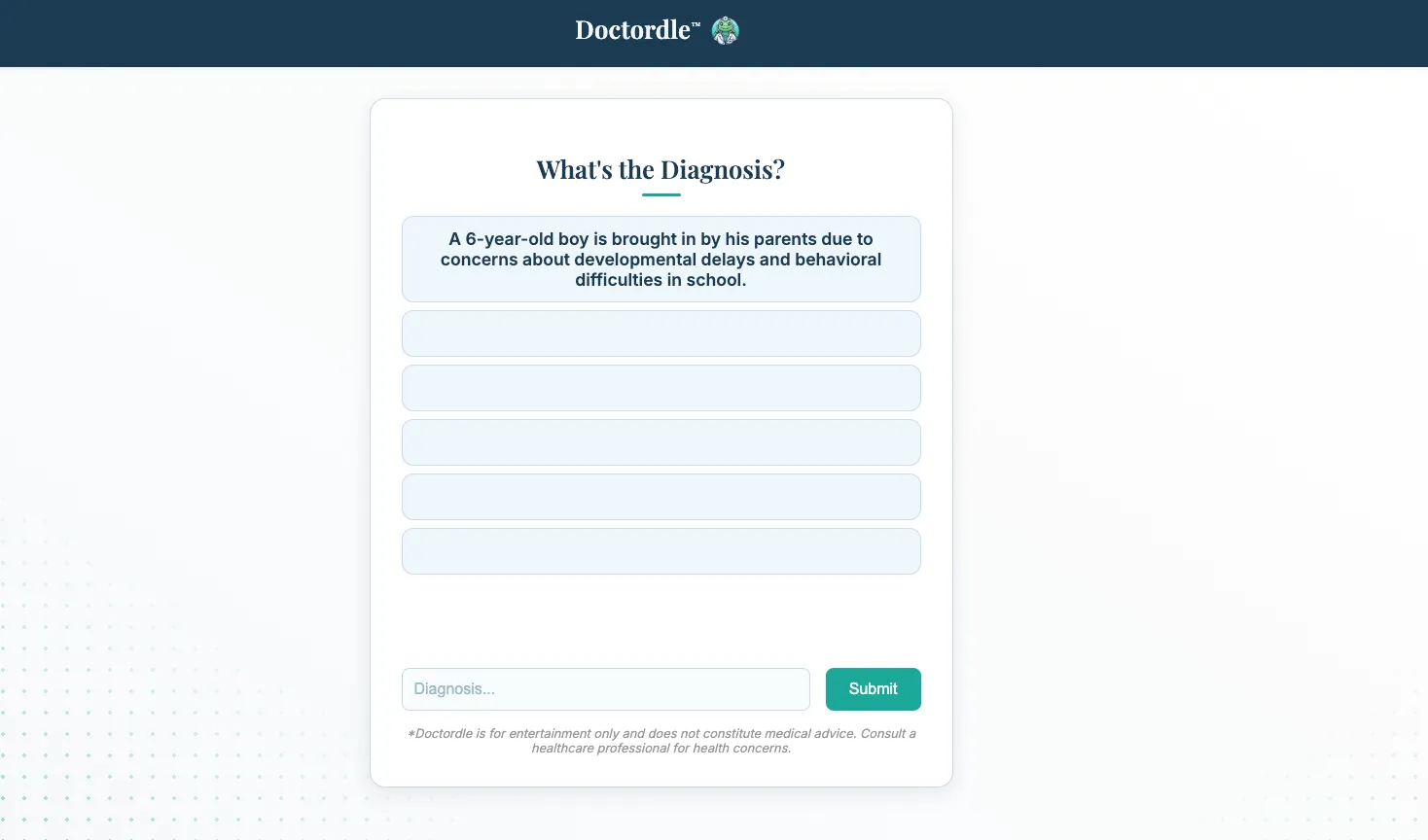
Doctordle Game Rules (The Catch / The Trap)
The catch in Doctordle is that the answer is not sitting inside a word grid. It is hiding inside the case details.
- One daily case: Each day gives players a new clinical scenario.
- Guess the diagnosis: Your answer should be the medical condition, syndrome, or diagnosis suggested by the vignette.
- Limited attempts: You only get a small number of guesses, so every submission matters.
- Wrong guesses reveal more: If you miss, the case can give you another clue or more clinical detail.
- Earlier solves feel stronger: Solving from fewer clues is the real brag.
- After the round, review the summary: The game can show a diagnosis explanation or review material once the case is complete.
- Not medical advice: Doctordle is a browser puzzle and study-style game, not a tool for diagnosing real patients.
Visual idea:
Case Clue 1: Fever, rash, joint painPlayer Guess: ???Miss → Clue 2 unlocked: Travel history appearsMiss → Clue 3 unlocked: Lab finding appearsFinal Goal: Name the diagnosis before the case fully exposes itself.
How To Play Doctordle?
Read the opening case
Player Sees: A short patient scenario with age, symptoms, and a key complaint.
What This Means: Start building a differential before touching the answer box.Make an early diagnosis guess
Player Guesses:pneumonia
Game Response: The answer is checked.
What You Learn: If it is wrong, your first theory is eliminated and the case begins to sharpen.Use the next clue like evidence
New Clue Appears: A lab result, exam finding, history detail, or timeline change.
Next Constraint: Do not just guess another random disease — update the diagnosis based on the new fact.Narrow the differential
Player Thinks: “This is not just respiratory; the rash and travel clue matter.”
Next Guess: Choose the condition that best explains the whole picture, not just one symptom.Submit the final diagnosis
Result: A correct answer ends the case, and the post-game summary helps you understand why that diagnosis fits.
Doctordle Strategy & Tips
Start broad, then narrow fast. The first clue may be intentionally incomplete, so think in categories: infection, autoimmune, genetic, endocrine, neurologic, psychiatric, and so on.
Do not anchor too hard on one symptom. Doctordle punishes players who see one flashy clue and ignore the rest of the case.
Use age and timeline aggressively. A newborn with seizures, a teenager with sudden collapse, and an older adult with acute neurologic symptoms all point toward very different diagnostic worlds.
When a clue unlocks, ask what it rules out. The fastest solves come from elimination, not memorizing every possible condition.
Play it as a puzzle, not as real medicine. Doctordle is useful for pattern recognition and study-style reasoning, but real health concerns belong with a qualified medical professional.