
What is HAGL?
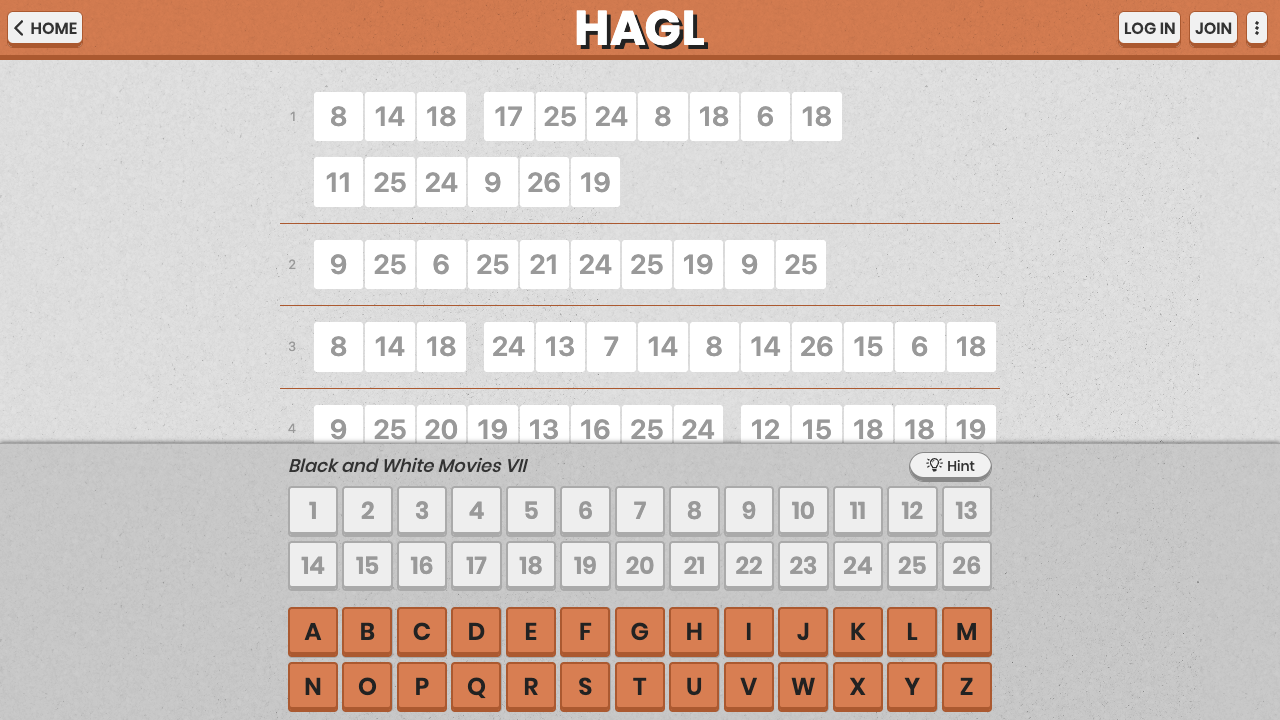
HAGL is a daily cipher game from PZLR. You receive a category and thirteen encoded items belonging to it. Each alphabet letter has been replaced by a number, and your job is to reconstruct the shared substitution and uncover the entire list.
The category gives the puzzle a trivia layer. It may suggest likely words or titles, but a candidate still has to match the encoded structure and remain consistent with the other answers.
One cipher connects all thirteen answers
Every occurrence of an encoded number corresponds to the same letter. Repeated numbers therefore reveal repeated-letter patterns, both within a single answer and across the list. Word lengths, spaces, and punctuation can provide additional clues before you have decoded anything.
This is a general number-for-letter substitution, not a guarantee that 1 means A or that the alphabet has been shifted by a fixed amount. Work out the mapping from the evidence on the board.
How to decode your first list
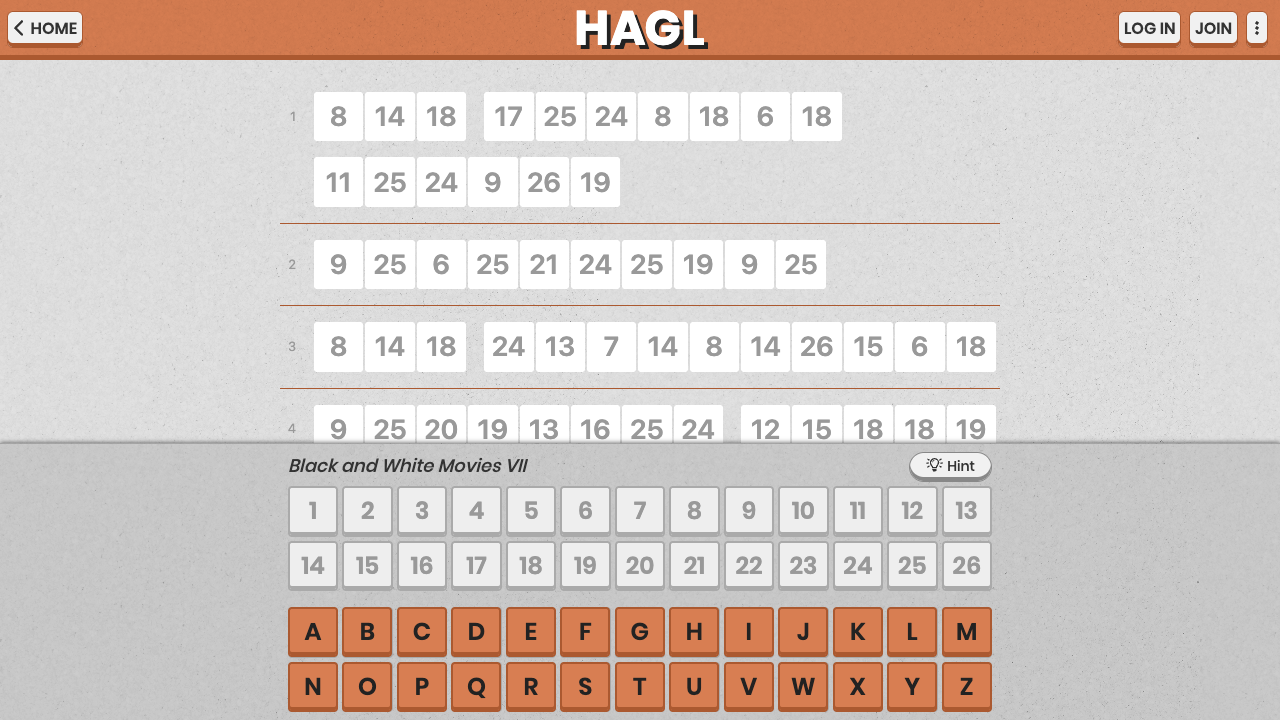
- Open today's HAGL and read the category before selecting Begin.
- Find a short or distinctive item whose pattern suggests a possible answer.
- Match letter tiles to encoded numbers by clicking, tapping, dragging, or typing.
- Check how those assignments affect the other items, and revise any mapping that creates a contradiction.
- Use Hint if needed, finish the list, and review or share the completed result.
Tips for working across the board
Repeated short words are useful anchors, especially in categories containing titles. A successful deduction in one item can expose part of several others, so alternate between the easiest-looking rows rather than solving strictly from top to bottom.
Before accepting a familiar title, check repeated letters carefully. If its second and fifth letters differ but the encoded item repeats the same number in those positions, it cannot be the answer. Keeping the substitution consistent is more reliable than relying on category knowledge alone.