
What Is Wordle?
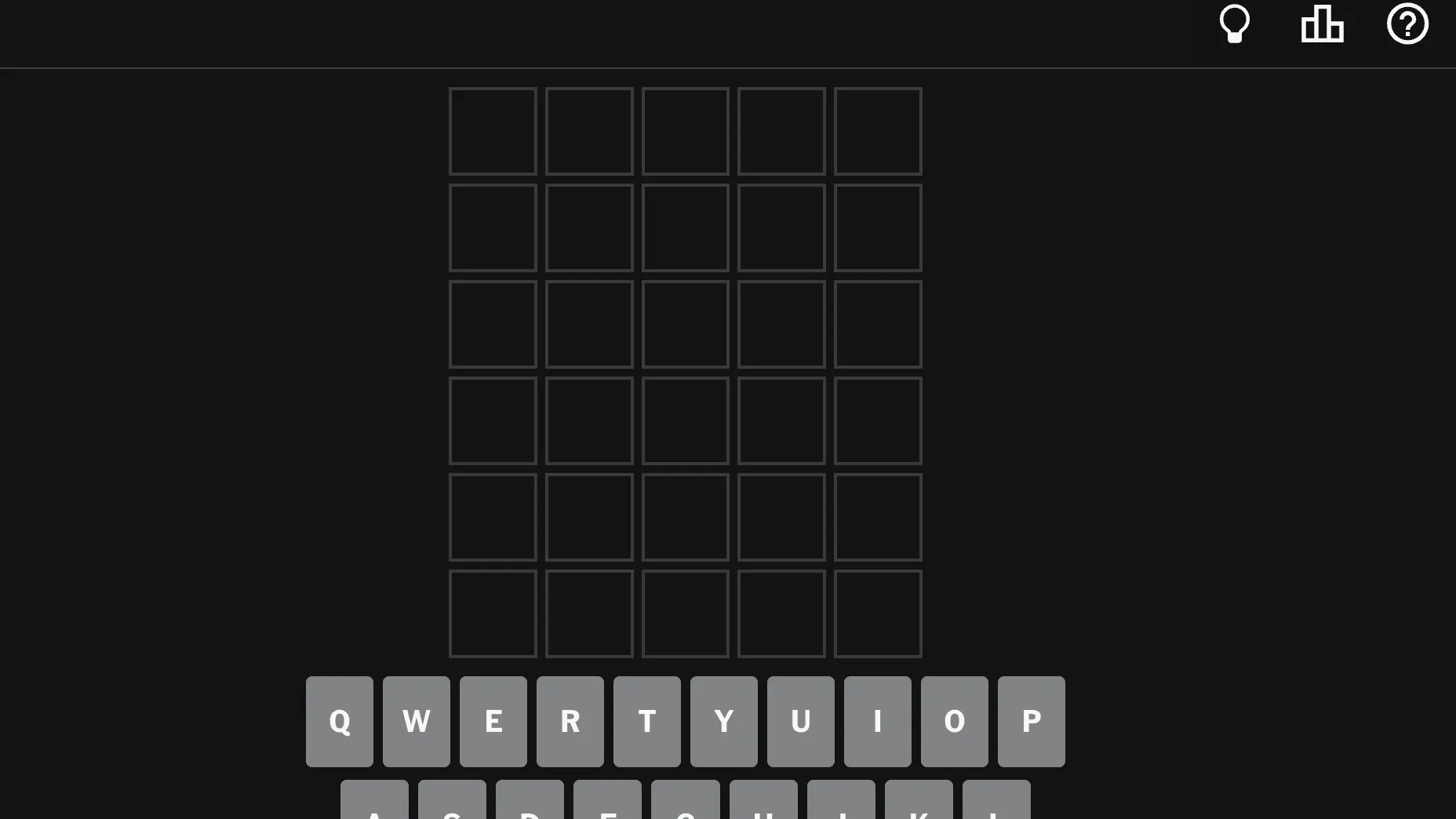
Wordle is a free daily word-guessing game where players have six attempts to discover a hidden five-letter English word. Every guess reveals color-coded clues, transforming a simple vocabulary challenge into a satisfying puzzle of logic, deduction, and pattern recognition.
Originally created by software engineer Josh Wardle, Wordle became a worldwide phenomenon before being acquired by The New York Times in 2022. Its straightforward rules, minimalist design, and shareable results helped inspire hundreds of word-guessing games.
Unlike unlimited word games, the original Wordle presents one new puzzle each day. Players around the world tackle the same daily answer, making it easy to compare solving strategies without revealing spoilers.
Wordle is particularly appealing because it requires no complicated instructions, downloads, or lengthy gaming sessions. A typical puzzle takes just a few minutes, but finding the correct word can demand surprisingly careful thinking.
Wordle Rules: How Does the Game Work?
The objective is simple: identify the secret five-letter word within six valid guesses.
Each guess must be a recognized five-letter word accepted by Wordle's dictionary. After submitting a guess, the five letter tiles change color to reveal how closely your attempt matches the answer.
Understanding Wordle's Three Colors
- 🟩 Green: The letter appears in the answer and is in the correct position.
- 🟨 Yellow: The letter appears in the answer but belongs in a different position.
- ⬜ Gray: The letter is not needed in that position and generally does not appear in the answer. With repeated letters, gray can also indicate that the guess contains more copies of that letter than the answer.
Every submitted word provides new information. Successful players use these clues to eliminate impossible answers and discover the correct letter arrangement.
Core Rules
- You have a maximum of six guesses.
- Every submitted guess must contain exactly five letters.
- Guesses must be accepted by the game's word list.
- Green tiles confirm both a letter and its position.
- Yellow tiles confirm a letter but indicate an incorrect position.
- Letters may appear more than once in the answer.
- The puzzle ends when you solve the word or exhaust all six attempts.
- A new daily puzzle becomes available at midnight.
The game also includes an optional Hard Mode, which requires revealed hints to be used in subsequent guesses. This makes careless experimentation more difficult and rewards disciplined deduction.
How to Play Wordle: A Step-by-Step Example
Wordle is easy to learn, but understanding how clues work together is the key to solving puzzles consistently.
Consider a hypothetical round in which the hidden answer is PLANT.
Step 1: Enter Your First Five-Letter Word
Visit the official Wordle website and enter a valid five-letter word. A strong starting guess should include several common letters.
Example opening guess:
CRANE
After pressing Enter, imagine the game reveals:
⬜ ⬜ 🟩 🟩 ⬜
This result tells you that A and N are correctly positioned, while C, R, and E are not in the hidden answer.
You now know that the answer follows this pattern:
_ _ A N _
Step 2: Use the Clues to Narrow Your Options
Rather than guessing randomly, look for words that preserve A and N in their confirmed positions while testing additional letters.
A useful second guess might be:
SLANT
The resulting feedback is:
⬜ 🟩 🟩 🟩 🟩
Four green tiles reveal that L, A, N, and T are correctly positioned. The gray S shows that the first letter must be something else.
Your updated pattern is:
_ L A N T
Step 3: Identify the Missing Letter
With four letters confirmed, possible answers become much easier to evaluate.
Since the first letter cannot be S, C, R, or E, consider other valid words matching the pattern.
The word PLANT fits every revealed clue.
Step 4: Submit the Final Answer
Enter:
PLANT
The final row becomes:
🟩 🟩 🟩 🟩 🟩
Congratulations! You solved the hypothetical Wordle in three guesses.
Your result would be recorded as 3/6, indicating that you found the answer on your third attempt.
Once the puzzle is finished, you can share your colored result grid without revealing the answer. Return for another challenge when the next daily puzzle is released.
What Makes Wordle Different?
Wordle stands out from traditional word games because it combines a strict guessing limit with information-rich feedback.
One Shared Daily Challenge
The original Wordle offers one main puzzle per day rather than an endless series of rounds. This creates a shared experience in which friends, family members, and online communities can compare their results.
Six Guesses Create Meaningful Pressure
Every attempt matters. A guess that reveals several useful letters can dramatically improve your chances, while a poorly chosen word may leave too many possibilities for the remaining turns.
Simple Rules, Genuine Strategy
Wordle does not require advanced vocabulary knowledge to get started. However, consistently solving puzzles requires an understanding of common English letter combinations, positional constraints, and effective information gathering.
Spoiler-Free Sharing
Wordle's recognizable colored grids let players share how many guesses they needed without exposing the secret word. This feature helped turn an individual puzzle into a social daily activity.
Wordle Strategy Tips: How to Improve Your Score
Although luck can influence the first guess, a structured approach makes Wordle more manageable.
1. Start with Common Letters
Choose an opening word containing frequently used English letters and a useful balance of vowels and consonants.
Popular opening choices include:
- CRANE: Tests common consonants alongside A and E.
- SLATE: Covers S, L, T, A, and E.
- ARISE: Includes three vowels and two common consonants.
- TRACE: Tests a productive combination of consonants and vowels.
There is no universally perfect opening word for every player's strategy. The most useful first guess is one that produces actionable information.
2. Avoid Repeating Eliminated Letters
If a letter is confirmed absent, usually avoid including it in later guesses.
For example, if C, R, and E are gray in your opening guess and none are affected by repeated-letter ambiguity, testing those letters again generally wastes valuable space.
Instead, prioritize unexplored letters that could meaningfully reduce the remaining possibilities.
3. Use Yellow Letters Carefully
A yellow letter belongs somewhere in the answer, but not in the position where it appeared.
If T is yellow in the fourth position, future guesses should explore other possible positions for T.
Simply including the correct letters is not enough. Their placement matters just as much.
4. Watch for Repeated Letters
One common Wordle mistake is assuming every letter in the answer must be unique.
Words such as APPLE, LEVEL, and SHEEP contain repeated letters and demonstrate why this assumption can lead to incorrect deductions.
When a guess includes duplicate letters, Wordle's color feedback reflects how many copies of that letter are actually present in the answer. A gray duplicate does not necessarily mean the letter is entirely absent.
5. Balance Information and Immediate Solutions
Sometimes, the strongest guess is not the word most likely to be correct.
Suppose several possible answers differ only in their first letter. In Normal Mode, a carefully chosen exploratory word may test several candidate letters at once.
This approach can be especially useful when many possibilities remain and guessing them individually would consume too many attempts.
However, remember that Hard Mode restricts this tactic by requiring previous hints to be incorporated into subsequent guesses.
6. Think About Common Word Patterns
English words frequently share recognizable letter combinations, including:
- Common endings such as -ER, -ED, and -LY.
- Frequent consonant pairs such as TH, CH, SH, and ST.
- Common starting combinations such as BR, CL, and TR.
Recognizing these patterns can make unfamiliar letter arrangements easier to solve.
Avoid treating a common pattern as guaranteed, however. Wordle can occasionally select words that challenge familiar assumptions.
Wordle Normal Mode vs. Hard Mode
Wordle offers two approaches to the same daily puzzle.
Normal Mode allows players to submit any accepted five-letter word on each turn. You can temporarily ignore previously discovered clues to test a completely different set of letters.
Hard Mode requires previously revealed hints to be used in later guesses. Green letters must remain in their confirmed positions, and yellow-letter information must be respected.
Normal Mode provides more flexibility for information-gathering strategies, while Hard Mode emphasizes consistent deduction from every clue.
Both modes use the same fundamental objective: find the five-letter answer within six guesses.
Is Wordle Free to Play?
Yes. The standard daily Wordle puzzle is free to play through The New York Times website.
Players can open the official game in a modern web browser on desktop, tablet, or mobile devices without downloading separate software.
A New York Times account is not required simply to attempt the standard daily puzzle, although signing in may provide additional ways to retain or synchronize personal statistics and access other account-related features.
The official version should not be confused with independent Wordle clones or Wordle Unlimited games, which may offer different interfaces, additional modes, or unlimited rounds.
Who Should Play Wordle?
Wordle is an excellent choice for players who enjoy short, thoughtful challenges rather than fast reactions or complicated controls.
It is particularly suitable for:
- Word puzzle fans who enjoy vocabulary and spelling challenges.
- Casual players looking for a quick daily brain teaser.
- Logic puzzle enthusiasts who like solving problems through elimination.
- Friends and families who enjoy comparing daily results.
- Players who prefer free browser games that require little setup.
Because each puzzle is short and the core mechanic is easy to understand, Wordle works equally well as a morning routine, a lunch-break distraction, or a quick evening challenge.
Wordle FAQ
How many guesses do you get in Wordle?
You get six attempts to identify the hidden five-letter word. Solving the puzzle in fewer attempts produces a better individual result.
Does everyone get the same Wordle answer?
Yes. The official daily Wordle uses a shared answer for each puzzle date, allowing players to compare results with others solving that day's challenge.
Can a Wordle answer contain repeated letters?
Yes. Answers may contain the same letter more than once. Repeated-letter feedback follows the number of matching letter occurrences in the answer.
Can you play Wordle more than once per day?
The original Wordle is designed around one new daily puzzle. Players seeking unlimited rounds can try independent Wordle Unlimited games, although these are separate from the official experience.
What does 3/6 mean in Wordle?
A result of 3/6 means the player solved the puzzle on the third of six available guesses. A result marked X/6 indicates that the answer was not found within the limit.
Is Wordle available on mobile?
Yes. The official Wordle game works in mobile web browsers and is also available through The New York Times Games app.
Final Verdict: Is Wordle Worth Playing?
Wordle remains one of the most approachable and satisfying daily browser puzzles because it turns five letters and six guesses into a meaningful test of reasoning.
Its greatest strength is the balance between accessibility and strategy. Beginners can understand the rules almost immediately, while experienced players can refine opening words, analyze letter frequencies, experiment with Hard Mode, and work toward more consistent results.
The once-per-day format also gives Wordle a distinctive appeal: each new puzzle becomes a small shared event rather than another level in an endless game.
Ready to test your vocabulary and deduction skills? Play the official Wordle, solve today's five-letter challenge, and see how few guesses you need.